Short answer: For a guided wine tasting, choose unobtrusive background music for arrivals and social moments, then lower or stop it while the host explains a wine or guests form their first impressions. Start with restrained arrangements, modest changes in energy and enough quiet for conversation. There is no single genre that suits every tasting, and a particular song cannot be promised to improve a wine.
The useful question is, “What are guests doing at this moment?” A walk-around tasting, a seated lesson and a wine-bar evening need different attention. Plan the music around that task before assembling a list of favourite tracks.
Give each tasting moment its own music cue
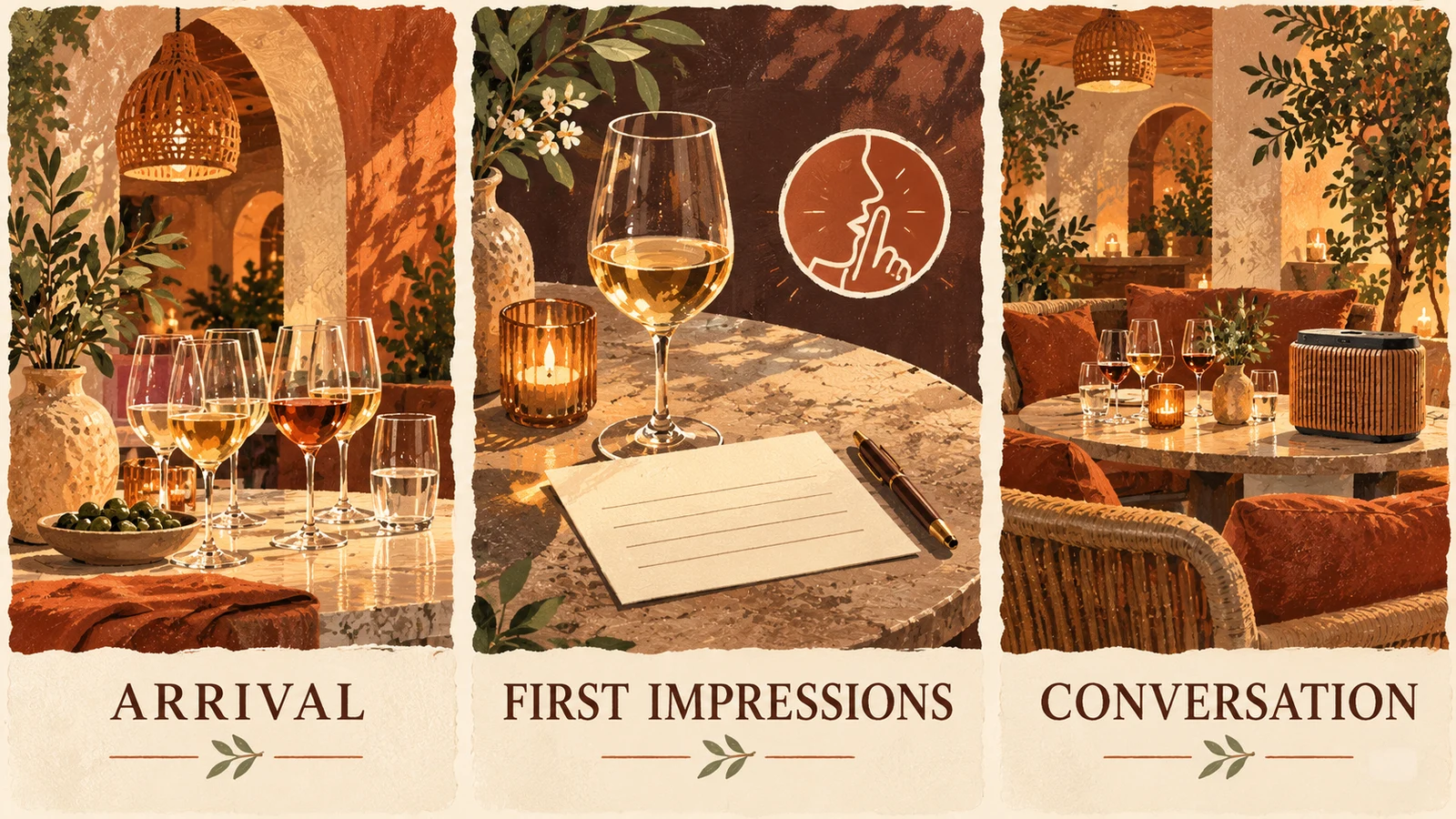
Use a short run of show that names the host's cue, the intended music state and who controls it. This makes a small event easier to coordinate without assuming music should run at the same level throughout. The plan below is an operating example you can adapt; it is not a measured recipe for guest satisfaction, wine perception or sales.
| Moment | Suggested music state | Host or operator cue |
|---|---|---|
| Guests arrive | Low, welcoming background | Keep greetings and practical instructions easy to hear |
| Host introduces the tasting | Lower or stop | Wait until the room has settled before the opening words |
| Wine is introduced | Quiet or silence | Give the wine, producer and tasting task clearly |
| Guests form initial impressions | Silence if appropriate to the exercise | Leave space for their own notes before offering descriptors |
| Guests discuss the wine | Optional low background | Resume only if it leaves conversation comfortable |
| A deliberate music-pairing segment | Play the selected passage as part of the activity | Explain the creative premise and avoid prescribing what guests should perceive |
| Closing and informal conversation | Return to the agreed background programme | Confirm that the formal tasting has ended |
The key is a shared cue, not a precise universal level. The host should not have to compete with a song to obtain attention, and the operator should not have to guess whether a pause in speech means the explanation is finished.
Choose arrangements that leave room for the host
Start by auditioning restrained instrumental jazz, gentle acoustic textures, light electronic music or other selections that fit the venue without dominating it. These are options to listen to, not rules assigning a genre to a wine. Compare arrangements, vocal density, changes in intensity and endings. A quiet opening does not establish that the whole track will remain unobtrusive.
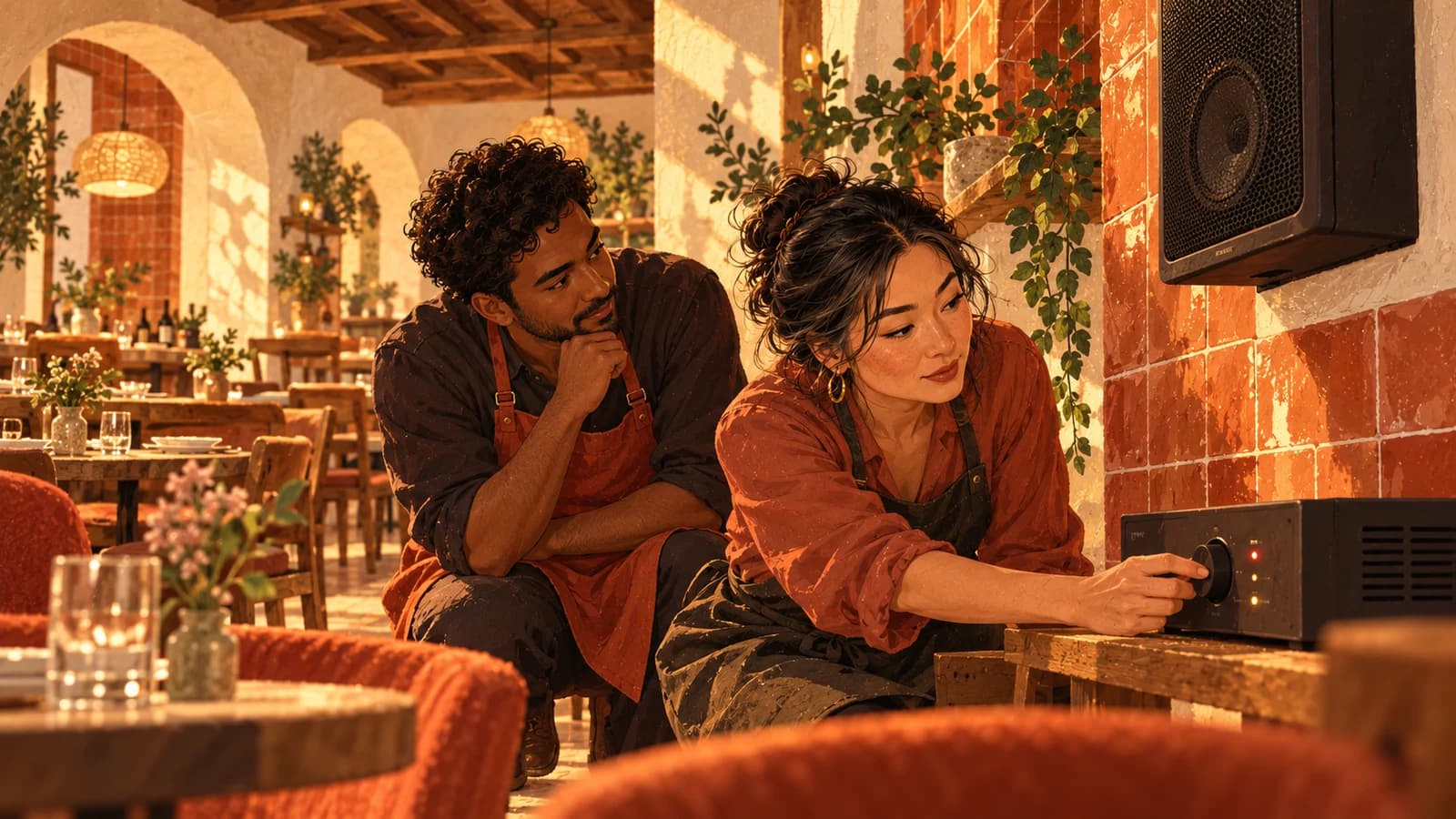
Listen through the actual speakers while someone gives the introduction from the host position. Check seats near a speaker and those farther away. If guests need to lean forward or ask for repetition, lower or stop the music before deciding that the host needs more volume. Use the background-music level guide for an observation-led room check.
Avoid building the programme around prestige alone. A dramatic orchestral passage, familiar vocal hook or sudden solo can pull attention away from a quiet explanation. Equally, an instrumental track can be busy and distracting. Choose from what the recording does in the room rather than the reputation of its genre.
Keep wine-and-music pairings creative, not prescriptive
You can offer a music-pairing activity as an invitation to compare impressions, without claiming that a particular track will produce the same response in everyone. Let guests describe what they notice and allow “no difference” as an answer. Do not tell them that their wine should become sweeter, more expensive-tasting or better because the programme changed.
If you want a structured comparison, hold the wine, pour, setting and question as steady as practical while changing the music condition. Start with an unprompted impression, then compare the selected passage with quiet. Describe the exercise as part of the event, not scientific evidence from your guests. Informal responses do not establish a general sensory effect.
Keep your conclusion proportionate: “The group preferred talking during the quiet section” is an observation if you actually gathered it. “This playlist improves the wine” is a different claim. A host can offer an engaging experience without turning a creative association into a guaranteed outcome.
You do not need a different song for every glass
A stable background programme can be more manageable than repeatedly matching a track to each wine. Change the music only when the change serves a defined part of the tasting. If music is itself the subject of a pairing segment, make that explicit; otherwise, give the wine and conversation room to lead.
Before the event, hear the full sequence rather than choosing from short previews. Notice abrupt endings, contrasting energy and repeated vocals. Check what happens when the host runs longer than expected. A programme that needs constant manual track selection can pull the operator away from the guests at exactly the wrong moment.
For transitions, use the crossfade guide if the actual player supports it and the tracks blend appropriately. A transition setting should serve the programme, not cover up an unsuitable selection. Silence between activities can be deliberate and useful.
Agree the host-and-operator handover before arrivals
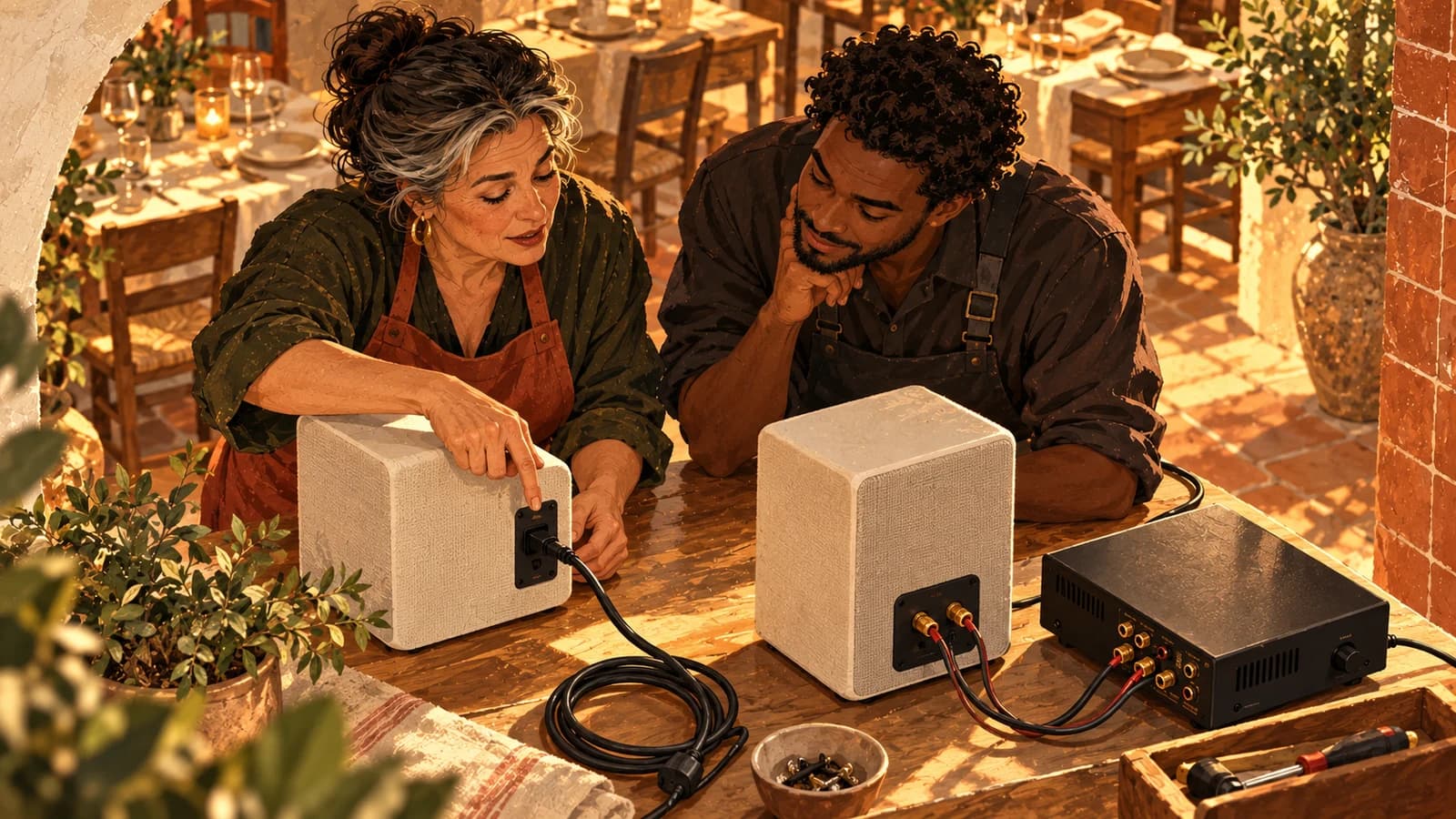
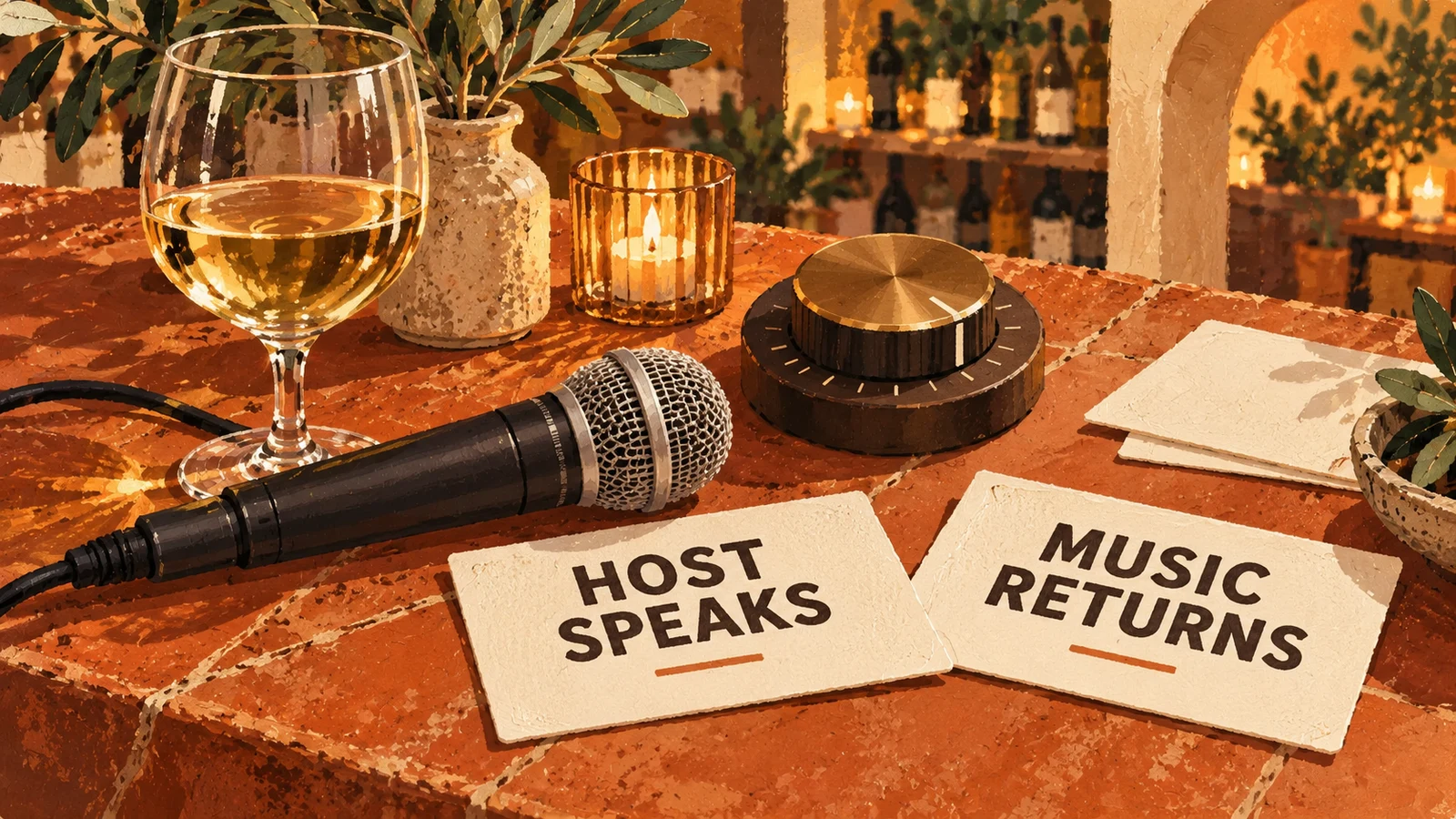
Name one person who can stop, lower and restore music, and agree a visible or spoken cue with the host. Set the ordinary background reference before guests arrive. Rehearse the introduction and a delayed restart so both people know what to do if the tasting timing changes or the host adds a question-and-answer section.
If the host also controls music, make the stop action easy to reach without abandoning the group. Check account access and device power before the event. Do not depend on a guest's phone or a staff member who is leaving halfway through. The staff music policy guide helps make control ownership clear.
When a microphone is part of the setup, verify its path separately. The music-ducking guide explains how compatible equipment can reduce background music during speech. Manual control is still a useful fallback; this guide does not assume that the venue's player or mixer supplies automatic ducking.
Check the music source for the event you are actually running
For UK public music use, start with the government's licensing guidance, then check the source agreement, repertoire, venue and activity. A playlist recommendation or the ability to play a consumer app through the bar's speakers does not establish event permission. Ask the venue and organiser who owns each part of that check.
If you intend to film the tasting or share a social video with music audible, check that use separately. Venue playback permission does not itself establish permission to reproduce music in a recording or combine it with video. Keep the audio plan clear for the person filming so a promotional clip does not accidentally become a different rights question.
Sonosfera offers its own background-music catalogue under its terms. An active plan covers Sonosfera music at the locations on the plan; outside sources need their own permissions. The terms also allow social media content recorded at your venue with Sonosfera music playing. Check the terms for the activity you intend, and keep recordings from another catalogue separate from that permission.
Finish with a short practical rehearsal
Run the arrival programme, give the opening introduction, pause for a tasting note and restore music for discussion. Listen from the guests' positions. Confirm that the host can be heard, first impressions have space, the operator recognises the cues and the ending returns to the intended background level. Fix the awkward handover before spending more time finding another playlist.
Use the business-type directory for the venue's wider operating needs. Browse Sonosfera's catalogue to audition a suitable background programme, and check the current UK plan if its music and scope fit. For a tasting built around particular recordings or a staged performance, choose the source and rights arrangement that specifically supports that activity.