
Short answer: For an all-year shop, start a light Christmas music mix at the beginning of December, then bring it forward if your seasonal offer gives you a clear reason. Keep the mix varied, check repetition across a full staff shift and agree when it finishes. Switching to a short festive loop for every opening hour is an easy way to make the music feel much longer than the visit.
There is no single start date that suits every retailer. A Christmas specialist and a neighbourhood essentials shop have different reasons for introducing seasonal music. The useful decision is when the music supports your actual seasonal offer, how prominent it should be and who will adjust it when the first plan does not work.
When should your shop start Christmas music?
Use the beginning of December as a starting point for an ordinary all-year shop, then adjust it alongside your displays, seasonal stock and opening hours. Explain the decision to staff. If the shop is still trading an ordinary autumn range, a full festive soundtrack needs a reason. If a Christmas department is already open, consider whether that department and the rest of the shop should hear the same programme. Write the decision down before different shifts improvise different answers.
A 365 Retail report describes differing shopper and staff attitudes to seasonal music. It is a report of a supplier-linked survey, not a calendar rule or proof of what your customers prefer today. Use it as a reason to ask about timing and repetition, rather than borrowing an old percentage as a current instruction.
Before launch, ask colleagues a concrete question: "Which part of last year's music became tiring, and when did it happen?" A familiar song, an overly dense arrangement and a repeated opening sequence need different remedies. Keep those answers with the seasonal plan.
Change festive density before changing the whole shop
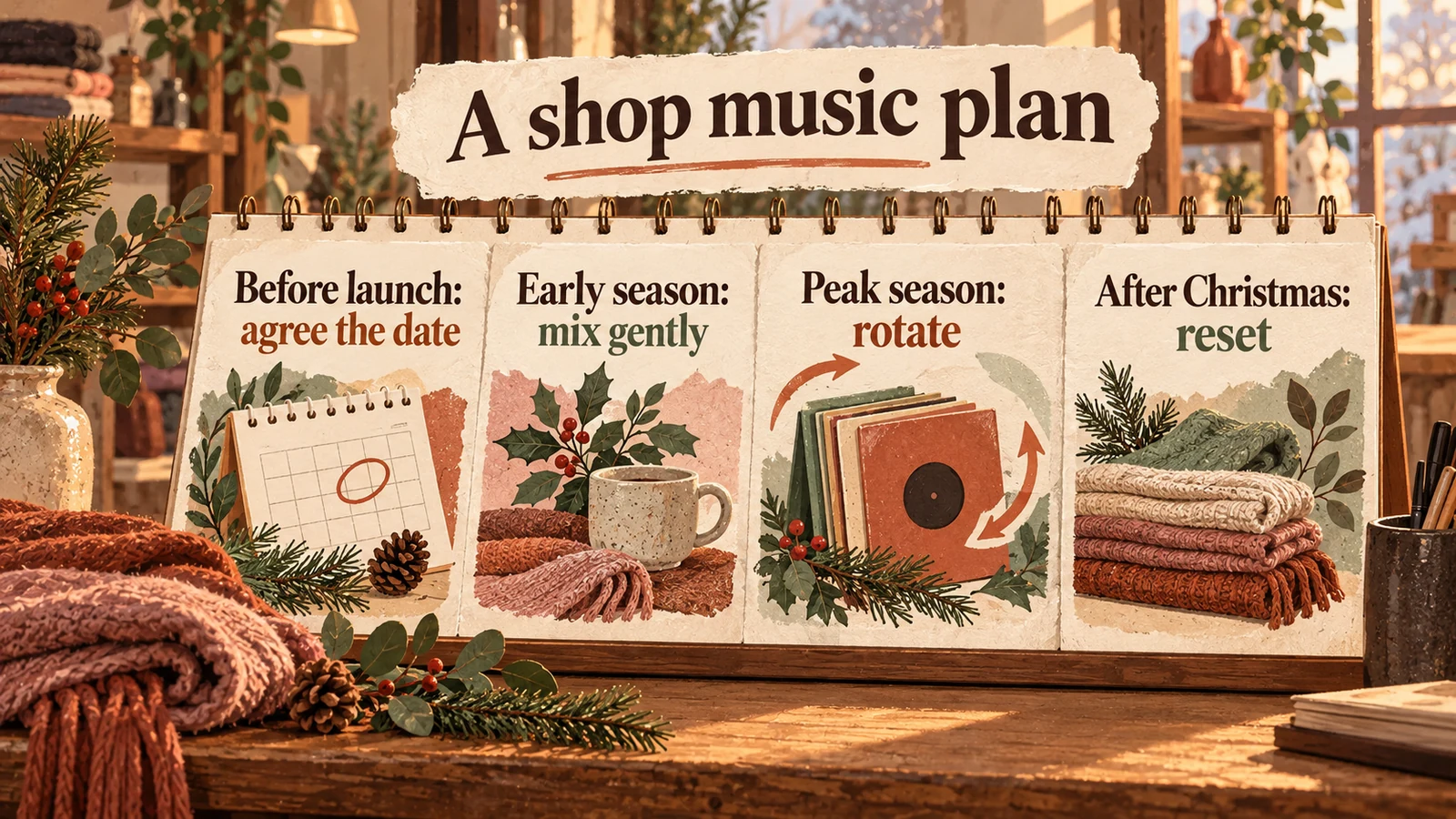
Decide how often seasonal tracks appear as a separate choice from which tracks are available. Early in the season, a mixed programme may fit better than a complete replacement of your normal sound. Near the shop's main Christmas trading period, a more festive selection may be appropriate. These are programming choices to test locally, not fixed ratios established by research.
Here is a workable progression to adapt:
| Stage | Programming decision | What to listen for |
|---|---|---|
| Before launch | Keep the normal sound; confirm the seasonal date | A clear agreement across shifts |
| Early season | Introduce seasonal material among suitable everyday music | Whether the change fits the shop's offer |
| Peak seasonal trading | Give festive music a larger role if it suits the shop | Repeated songs, intrusive arrangements and staff fatigue |
| After Christmas | Move deliberately into the next trading period | An unattended festive selection continuing by accident |
Keep the tone of the shop recognisable. An intimate gift shop does not need to sound like a party venue to feel seasonal. Try candidate tracks at the actual counter and browsing positions, especially their busiest passages.
Count different recordings and repeated songs separately
A seasonal selection can contain many recordings but still repeat the same recognisable song too often. Different versions may sound musically distinct while remaining the same recurring tune to someone on a long shift. Check both exact duplicates and clusters of versions, and look at what returns after a restart. Adding more tracks at the end will not fix a repeated opening sequence.
Use an ordinary staff shift as the listening window for this check. A customer may hear only a small part of the programme; colleagues hear the opening, the quieter period, the rush and the closing routine. Ask them to record the track and approximate time when repetition becomes noticeable, rather than collecting only a general verdict that "the music is annoying".
The arithmetic belongs in the guide to shop playlist length. For Christmas, add a second question: does the distinct material also offer enough variety in song, arrangement and energy? Runtime alone cannot answer that.
Keep seasonal music inside your quiet-hour promise
Christmas programming should follow the same published quiet-hour arrangements as the rest of the year. If your notice promises a music-free period, a softer instrumental carol is still music. Make sure the colleague starting that session knows which sources to stop and when ordinary playback resumes. Seasonal displays and supplier demonstrations can introduce extra audio, so check those sources too.
The quiet-hours guide covers how to keep the advertised promise through a handover. Include the Christmas selection in that existing procedure rather than creating an exception people have to remember.
Outside quiet hours, keep the music appropriate to the customer task. At the counter, staff need to hear questions and complete transactions. A festive lyric or a dramatic chorus does not deserve priority over that exchange. If one track repeatedly causes a problem, remove or replace that candidate before changing the entire programme.
Give each shift an operating decision
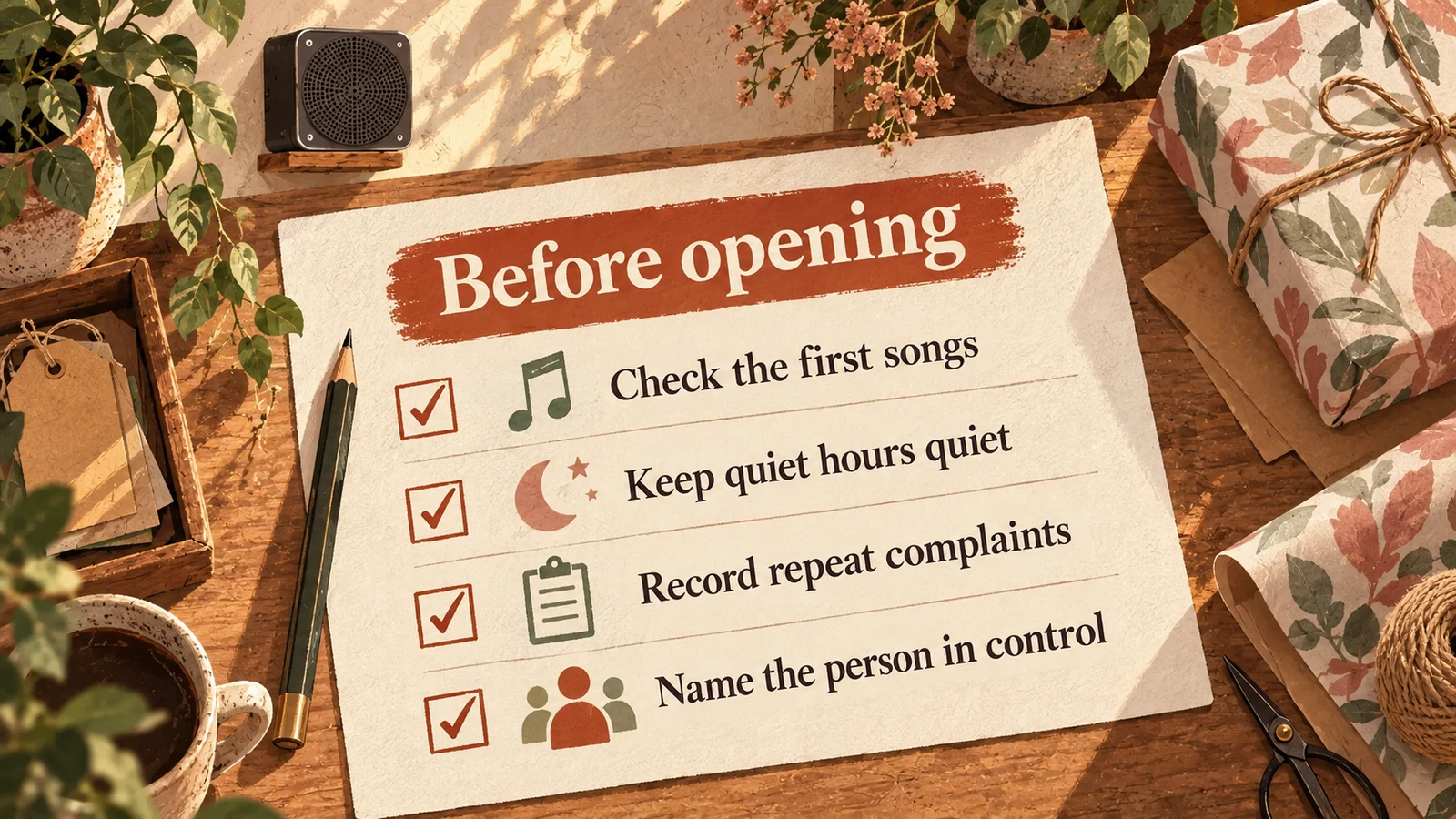
A useful handover tells the next person what should play, what should remain off and what to do when a problem occurs. Name the person who can change the selection, the approved programme for that stage of the season and the place to record feedback. Keep this short enough to use while opening the shop.
Copy these prompts into the existing opening notes:
- Which seasonal stage are we in today?
- Which selection should start, and does a restart repeat yesterday's opening?
- When does the quiet session begin and end?
- Which track or sequence needs checking after a complaint?
- Who decides whether to remove a track or change the mix?
- When does this seasonal programme finish?
Avoid turning a complaint into an argument about whether Christmas music is good or bad. "The same version returned during both counter shifts" is something the person running the programme can investigate. The retail music schedule can hold the ordinary service timings around this seasonal layer.
Check the repertoire before promising a festive selection
Choose a music service by listening to what it actually offers and checking permission for your intended use. Do not assume that a business-music catalogue contains particular Christmas recordings, artists or versions. If named songs are essential, establish their availability and the applicable rights before building the shop's plan around them.
Sonosfera supplies its own catalogue of business background music. Listen for the sound your shop needs and read the catalogue terms; this guide does not promise a particular festive track or playlist. You can explore the Sonosfera for retail and compare current UK plans once you know the programme you want.
Set the reset date now. At the end of the seasonal period, remove temporary sources, restore the next approved selection and tell the next shift what changed. A considered finish is part of a considered Christmas music plan.