
Short answer: If your shop promises a music-free quiet hour, switch background music off. A softer playlist is a different offer and should be described as lower-volume music. Tell customers what changes, what sounds may remain and when the session runs. Do not promise a silent or universally suitable environment that you cannot provide.
For a small retailer, this starts with a plain decision about the room, not a search for the perfect calming track. No music may be the correct choice. The next job is making that choice hold from the beginning of the advertised session to the end.
Editorial illustration: a shopkeeper adjusts a speaker while a customer browses homeware.
A start-and-finish check for the advertised session
Use a named opening check and a named handback. The colleague starting the session confirms which sources are off, which unavoidable sounds remain and when ordinary playback may resume. The next colleague repeats that information rather than inferring it from the volume knob.
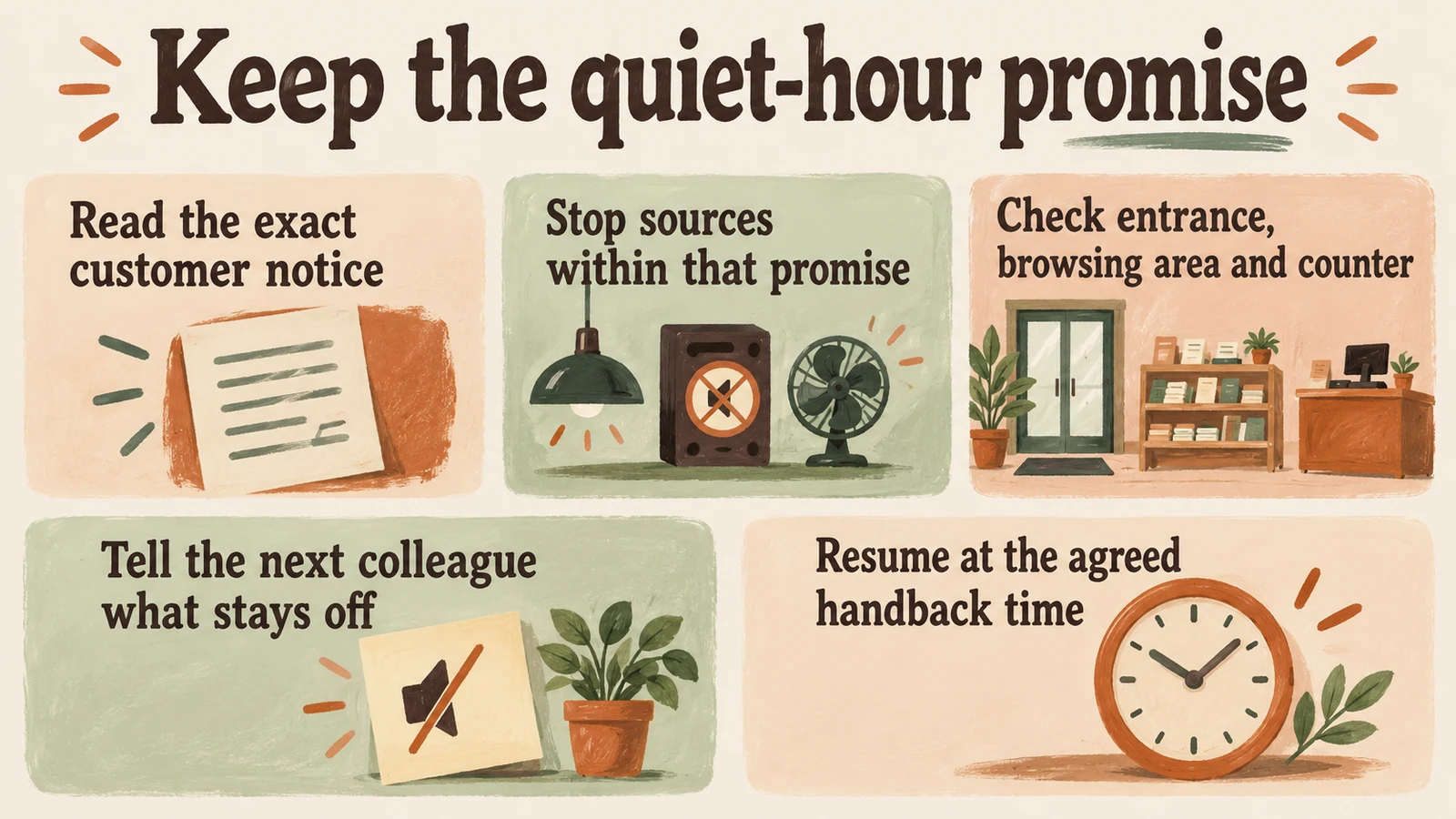
Example: in a shop with a counter speaker and a demonstration screen, stopping only the speaker would leave part of the promise unchecked. Walk to the screen and entrance as well. Keep emergency and safety systems working through the agreed venue procedure.
Use the instrumental-versus-vocal comparison for ordinary music periods. Neither choice replaces a promised music-free session.
Quiet hours need a clear description of music
Autism Guernsey's quiet-hours guidance recommends switching music off as one environmental adjustment. This is an example of what an organisation recommends, not evidence that every customer wants the same setting.
A label such as "quiet shopping" leaves room for interpretation. One person may expect background music to stop. Another may want to know whether a demonstration screen will still play audio. Describe the changes instead of making them guess.
If you retain music at a lower level, say so. Do not substitute instrumental music for the no-music session you advertised. Removing lyrics still leaves music playing, however gentle the selection sounds to the person choosing it.
For ordinary lower-volume playback outside a no-music session, the background-music volume guide covers the broader room check. A quieter setting and a music-off promise need different checks.
Match the promise to the space you control
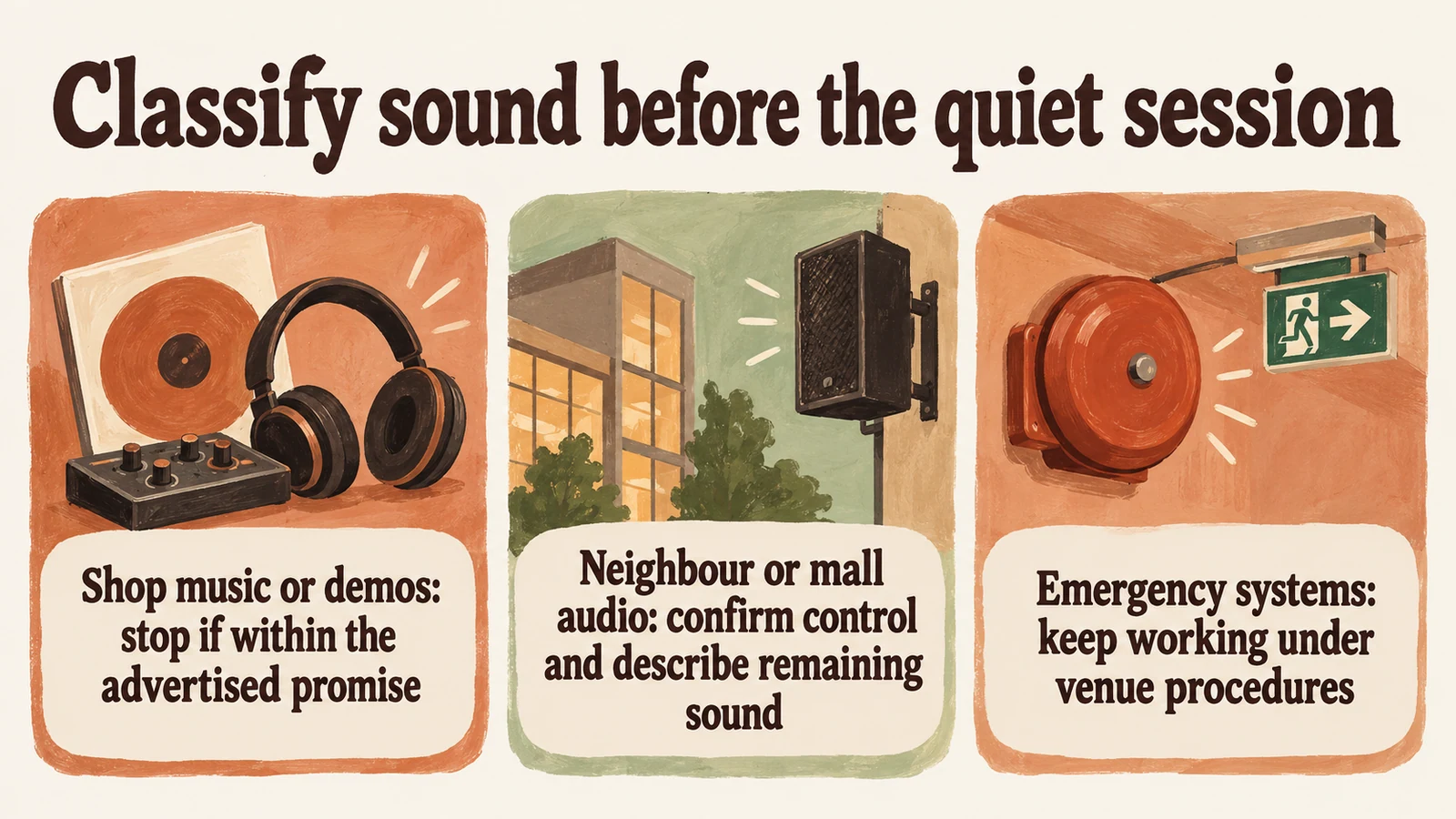
Example: a homeware shop inside a small shopping centre. The shopkeeper stops the counter speaker before a planned quiet session. At the entrance, music from a neighbouring unit is still audible. Further inside, a product demonstration has its own audio loop.
The counter action was correct, but it did not describe or address every sound a visitor could hear. The shopkeeper can stop the demonstration audio and ask the neighbour or centre manager about shared arrangements. They cannot truthfully promise that every nearby business will stop its music without agreement and verification.
Wellington Square's quiet-hours page distinguishes changes to mall music from work with individual shops. It also specifies emergency-only tannoy use. That separation is useful when deciding which part of a customer journey your own notice describes.
Before announcing the session, stand at the entrance and wherever customers browse or pay. Identify the audio your team controls and the sound that comes from elsewhere. This is a practical check of your promise, not an acoustic assessment or certification.
Two notices that make different offers
Adapt these sample notices to your checked opening times and quiet-hours arrangements.
For a music-off session:
During the advertised session, our shop's background music and demonstration audio will be off. Everyday shop sounds and music from neighbouring premises may still be audible. Emergency announcements remain active. Please ask a colleague if you would like help planning your visit.
For lower-volume music:
During the advertised session, we will play background music at a lower level. This is not a music-free session. Please contact the shop if you need more detail about the sounds you may hear.
Use only the notice that matches your offer. Put the same details on the door and wherever you announce the session online. Include a way to ask questions without requiring someone to explain a diagnosis.
Prevent the unexpected restart
Return to the shop. Halfway through its music-free session, a colleague takes over at the counter and presses play out of habit. The notice has not changed, but the room no longer matches it.
A named person should check that the intended audio is off and tell the next colleague when ordinary playback may resume. Include every music source within the promise, not just the most obvious speaker. If you use playback schedules, check whether an upcoming change could restart music during the session. Do not assume a saved setting will keep the room silent.
Check again after a handover or an unexpected sound. If music restarts, stop that source, acknowledge the interruption and find out what triggered it. A brief apology is more useful than insisting the session is quiet because it was quiet at the start.
Keep emergency announcements, alarms and other safety systems working. Do not disconnect shared safety equipment to silence background music. Where the controls are shared or unclear, ask the responsible facilities person how to stop the music safely before advertising that arrangement.
Ask what would help, without asking for a diagnosis
Autism Guernsey's guidance includes asking customers about helpful adjustments. Keep that invitation optional and practical. Ask whether the description matched the visit, whether unexpected music was audible, or whether different information would have helped them plan.
People can have different preferences without either answer being wrong. Avoid turning one positive response into a claim that the shop is suitable for everyone. Likewise, a concern about noise deserves a specific response rather than a request for personal medical information.
If the shop cannot deliver an advertised change on a particular day, update the notice and tell customers who ask. A precise limitation is more useful than a reassuring label that no longer matches the room.
Music outside the quiet session
You may choose ordinary playback afterwards, or decide that no background music suits the shop throughout the day. There is no requirement to fill the silence.
If you do use music at other times, the retail music schedule guide covers that wider plan.
If you want music for other trading periods, Sonosfera for retail describes the relevant offer, with current UK pricing. Sonosfera's terms explain its own catalogue licence at the locations on an active plan, including background music and instructor-led classes. Music from other sources needs its own licence. A music subscription is not an accessibility intervention or a guarantee about your room.
The first step is smaller than choosing a service. Write the exact music promise, check that your team can maintain it, and describe the remaining sounds honestly.
This applies to Sonosfera's own catalogue at the locations on your plan. No PPL PRS licence needed for Sonosfera music under an active plan. Music from other sources needs its own licence. See the catalogue terms for the locations and uses covered by your plan.
Frequently asked questions
Should shop music stop during a quiet hour?
Switch it off if you promise a music-free session. Lower-volume music is a different offer and needs a different notice. Keep safety announcements and alarms working.
Does instrumental music count as no music?
No. Removing lyrics still leaves music playing. Match the advertised promise to the actual sound, and check for an unexpected restart after a handover.