Short answer: A bingo hall should run background music as a set of named states, not a continuous shift soundtrack. Mark when social-area music may play, who stops it before sales or called games, who may restart it and what closes the system at the end of the night.
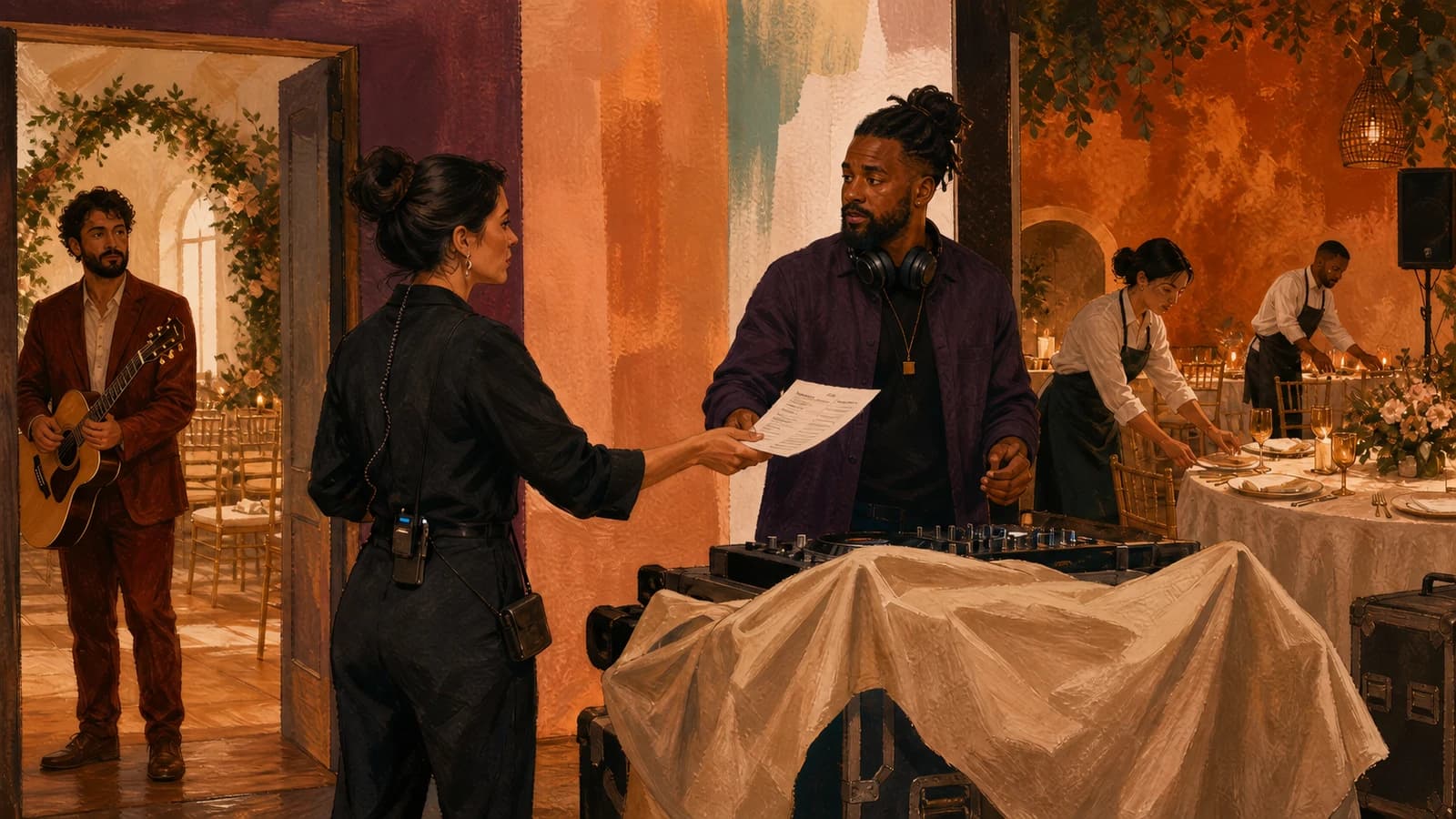
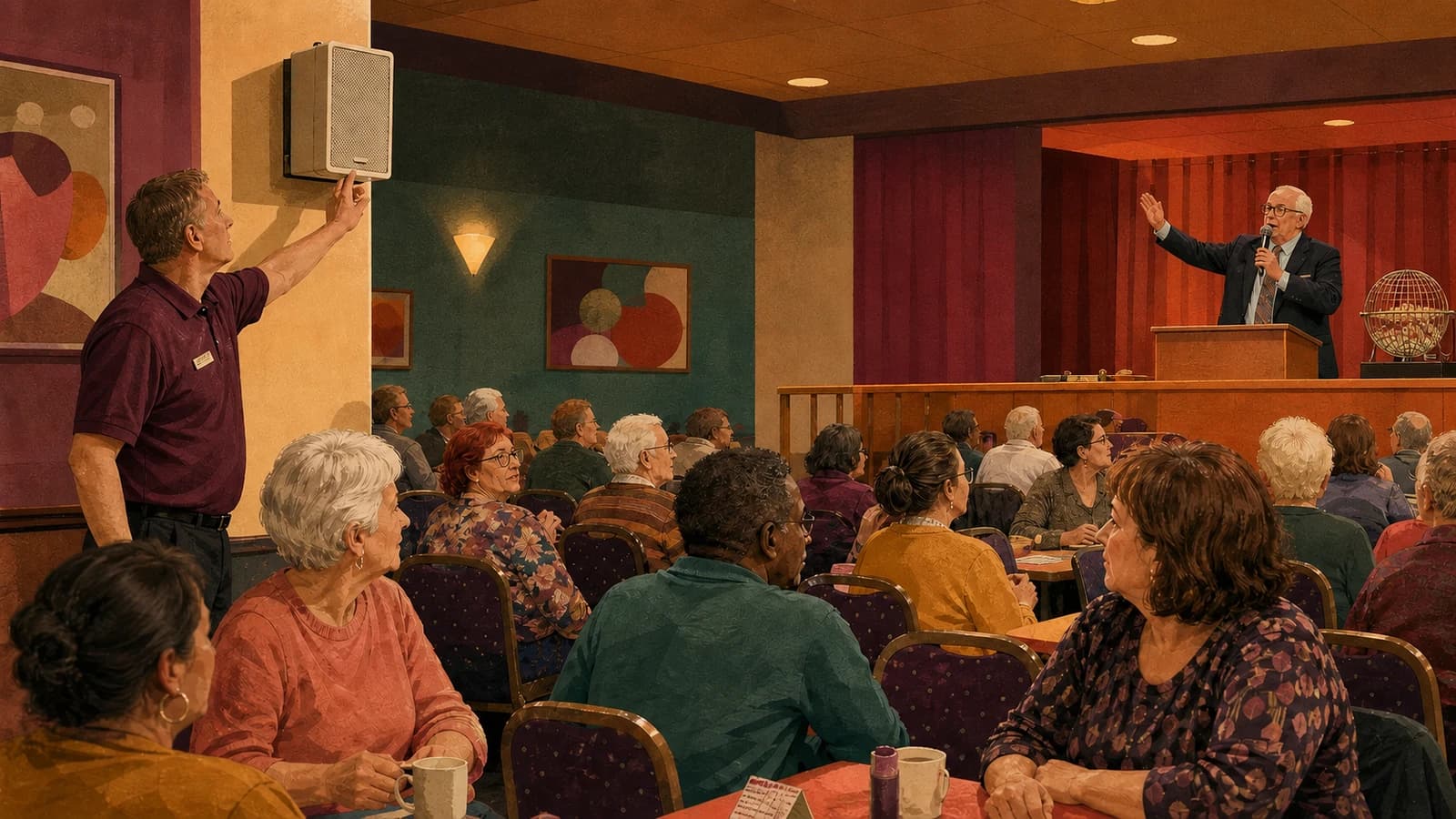
Original Sonosfera illustration; the people and venue are fictional and are not customers or endorsers.
Put the silence gates on the running sheet
| Shift state | Background music | Priority source | Operator action |
|---|---|---|---|
| Doors open | Approved social-area setting | Welcome and access instructions | Keep speech clear |
| Sales or explanation | Reduce or stop | Staff information | Duty manager confirms silence |
| Called game | Off in the hall | Caller and game system | Caller receives a clean handover |
| Break | Restart only if approved | Staff announcements still override | Named operator resumes |
| Closing | Stop | Closing instructions | Reset all zones |
The current PPL PRS entertainment and attractions guidance includes bingo halls among the uses it addresses. Check the current position for the actual source, areas and hours. Keep that separate from gambling-operation permissions and procedures. This is an audio handover checklist, not legal or gambling advice.
Use a spoken handover, not an assumption
Before a called game, one person says that background music is stopped and the caller confirms the hall is ready. After the session, the caller hands control back. If nobody owns the change, both sources can compete.
Test from a player's seat and the sales point, not only beside the speaker. Hearing needs and room acoustics differ; do not substitute a fixed volume number for a real walk-through.
Separate social music from game systems
Record the background source, caller system, microphone, machine audio and any television as different rows. A fault in one should not invite staff to improvise with a personal account on another.
For an approved lobby or social-area background zone, Sonosfera provides independent streams and phone controls for each zone's vibe and volume. It does not integrate with the caller, game system or announcements, and the operator still owns every stop and restart. Its catalogue terms keep outside sources separate.
Use the multi-zone guide if the lobby and social area need separate background streams. Check current UK plans only for the approved background areas.
Add this to the shift handover
If the building combines several social areas, compare the relevant room guides in the business-type directory. A bingo caller is not a background-music zone.
- current background state and zone;
- next scheduled silence gate;
- caller and duty-manager names;
- any room where two sources were audible;
- temporary device or supplier source;
- closing reset confirmation.
Frequently asked questions
Should music play during every break?
No. Restart only when the running sheet allows it and speech remains clear. Silence is a complete choice, not a failed playlist.
Does a bingo hall need a music licence?
List the actual public or business playback, sources, rooms and hours, then ask the relevant licensing body about that use. Do not infer the answer from the venue label alone.
This applies to Sonosfera's own catalogue at the locations on your plan. No PPL PRS licence needed for Sonosfera music under an active plan. Music from other sources needs its own licence. See the catalogue terms for the locations and uses covered by your plan.