Sonosfera
Loading your music experience...
Sonosfera
Loading your music experience...
Wondering how in-store music retail sales are connected? Discover how shop background music affects customer behaviour and drives revenue for UK shops.
On this page
On this page
Looking for legal background music for your business?
Explore the music libraryFounder, Sonosfera
Akash Kumar is a salon owner turned software founder. After years of running a hair and beauty business in the UK — and getting caught out by PPL/PRS licensing letters — he built Sonosfera to solve the problem he lived through firsthand.
73% of retail shoppers stay longer if they enjoy the music (MusicWorks, 2024). Playing the right audio directly increases in-store music retail sales, while the wrong playlist actively drives customers out the door. Auditory branding is just as critical as visual merchandising for UK small businesses today.
A carefully chosen playlist dictates how fast people walk, what they buy, and whether they return. We built Sonosfera because time-poor owners need music that just works legally. This guide cuts through the noise. You will learn exactly how music psychology affects the till, without the legal jargon. Mastering in-store music retail sales is easier than you think. Read our guide on the Best Background Music for Coffee Shops UK: A Genre Guide 2026 to see this in practice.
TL;DR: Background music directly controls shopper behaviour and spending. Matching your playlist's tempo and genre to your brand increases sales by 9.1% (HUI Research, 2023). UK businesses must use a commercial service to avoid severe PPL and PRS fines for illegal streaming.
Shops playing slow-tempo music see a 38% increase in gross sales compared to fast-tempo music (Ronald Milliman, Journal of Marketing, 1982). The tempo and volume of your music dictate how fast customers move and how much they buy, directly impacting in-store music retail sales. Fast beats rush people; slow beats encourage lingering.
Most independent cafe owners default to fast, loud music during the morning rush. They want to turn tables quickly. But at 3 PM, that same playlist creates a hostile environment for the remote worker buying their third flat white. You have to match your beats per minute (BPM) to the specific time of day.
Some owners argue that silence is better. They believe a quiet room allows customers to concentrate and prevents sensory overload.
The data proves otherwise. Foundational research shows that complete silence creates an uncomfortable, clinical atmosphere. Customers feel self-conscious. They whisper. They leave quickly. You can explore the mechanics of this in our breakdown of How Coffee Shop Music Customer Spending and Dwell Time Connect: The Research.
Shoppers exposed to background music with a tempo below 73 beats per minute spent 18% more time in-store than those exposed to music exceeding 93 beats per minute (Ronald Milliman, Journal of Marketing, 1982). Controlling the auditory pace directly changes how long a customer browses the shelves.
Match your BPM to your business goals. Slow it down to sell expensive retail items. Speed it up to clear a busy lunch queue.
Customers bought 3.1 times more expensive wine when shops played classical music instead of top 40 pop (Adrian North, Nature, 1999). Playing music that aligns with your brand identity increases perceived product value. Curated genre selection directly primes the customer's wallet and willingness to spend. This is the foundation of strong in-store music retail sales.
A local barber shop playing 90s hip-hop signals a specific demographic. A high-end spa playing ambient electronic music justifies a £90 massage. Your audio must match your visual merchandising. If you invest in expensive lighting and premium fixtures, playing cheap audio ruins the effect. See our 7 Best Background Music Services for Salons [2026] for examples of how to get this right.
Many owners believe playing top 40 radio or a personal Spotify playlist is fine. They assume everyone likes popular songs, so it must be a safe bet.
This is a mistake. Generic pop music lowers the perceived value of premium goods. Worse, commercial radio adverts actively kill the buying mood. An advert for discount car insurance disrupts the brand experience of a luxury hair salon.
When we audited a local London boutique last year, they were playing commercial radio. Customers visibly winced when loud DJ banter interrupted their browsing. They walked out without buying anything.
Brand-fit music increases customer satisfaction scores by 31% compared to random, mismatched playlists (HUI Research, 2023). A curated audio environment tells the customer exactly what to expect from your pricing and service, establishing trust before they even speak to a staff member.
Curated, brand-specific playlists are a marketing investment. They are not an afterthought.
UK businesses face average fines of £1,000 to £3,000 for playing personal streaming services without a commercial licence (PRS for Music, 2025). Using commercial music legally is non-negotiable. A great playlist means nothing if financial penalties wipe out your hard-earned profit margins.
The law is clear. You cannot use a personal Spotify or Apple Music account to broadcast music to the public. Those platforms are strictly for private listening. We cover the specifics of these rules in The Reality of the Gym Music Licence UK: PRS PPL Requirements for Fitness Studios 2026.
Many independent operators think, "I am too small a business for PRS or PPL to notice. I do not need a commercial licence for ten customers a day."
Licensing bodies actively audit independent UK businesses. PRS and PPL employ field agents who visit high streets specifically to check for valid licences. If they hear copyrighted music and you do not hold TheMusicLicence, they will backdate fees and issue fines. A standard PPL and PRS blanket licence often costs a small shop over £335 per year.
Please note: While this section outlines UK music licensing rules, it serves as business guidance rather than formal legal counsel. Always check the official gov.uk guidelines for your specific venue.
In 2023, PPL collected £279.7 million in revenue, a significant portion of which came from public performance licences in retail and hospitality venues (PPL Annual Review, 2024). Licensing bodies actively monitor high streets to ensure businesses pay for the commercial use of copyrighted music.
Businesses that intentionally design their audio environment see a 5% increase in repeat visits (MusicWorks, 2024). You must translate music psychology and legal requirements into everyday reality. A legal, brand-aligned playlist functions as a reliable sales tool rather than a frustrating administrative task.
Stop viewing music as a chore. It is a direct lever for revenue. If you want to boost in-store music retail sales, your audio should match your physical space. You can read about zoning different audio for different spaces in our guide on Music for Laser Clinics: What to Play in Reception vs Treatment Rooms.
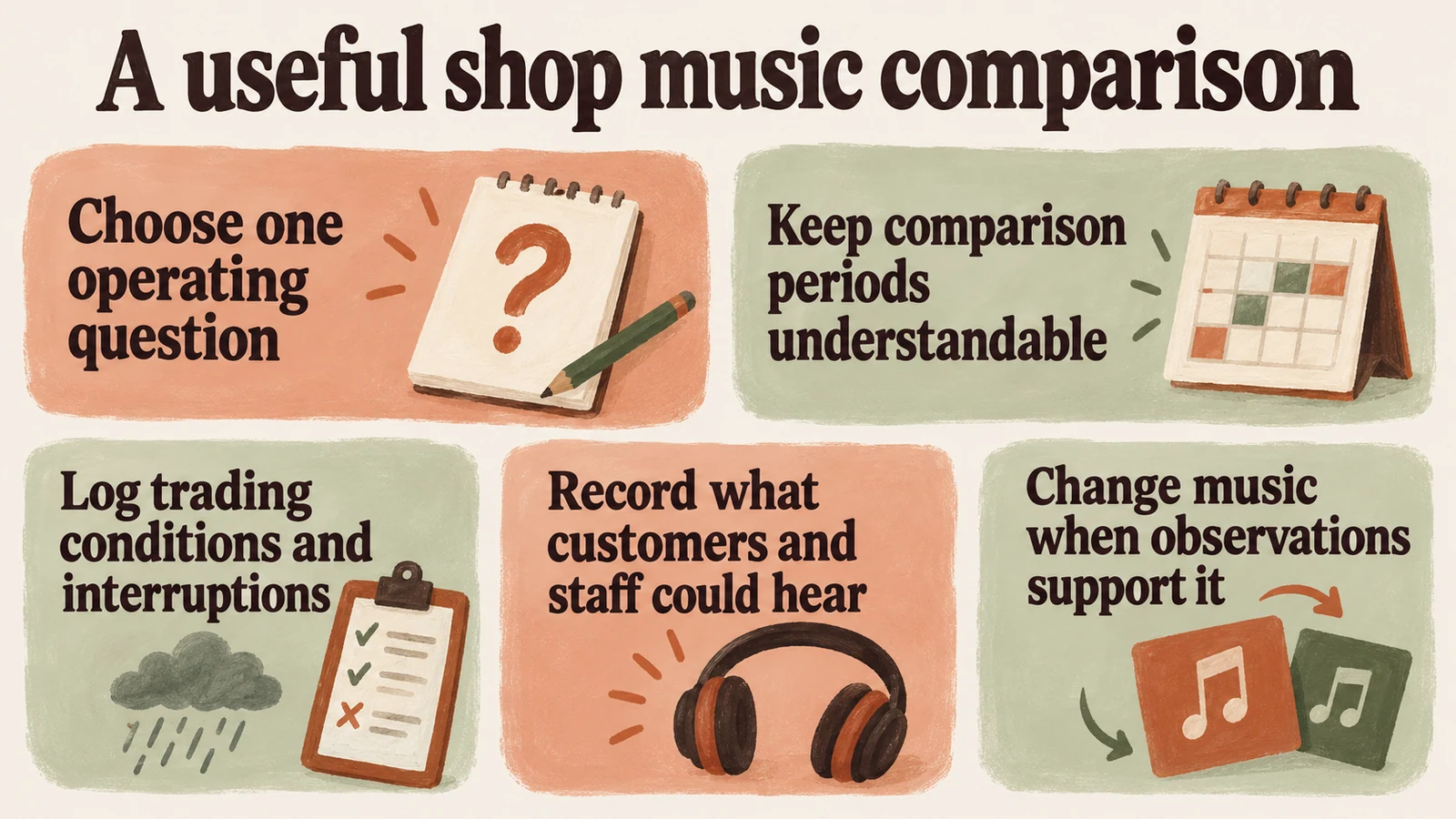
Here is a simple, three-step framework to audit your current in-store audio environment today.
First, check your licence. If you are using a personal streaming app, stop immediately. Second, define your brand's energy. Are you aiming for relaxed browsing or fast table turnover? Third, match the tempo. Pick playlists that reflect the time of day, keeping the BPM low for browsers and high for quick service.
Retailers who switch from random radio to curated, brand-aligned playlists report a 14% drop in staff turnover (HUI Research, 2023). Employees no longer suffer from repetitive audio fatigue, which improves their mood and naturally leads to better customer service interactions on the shop floor.
81% of consumers say background music lifts their mood in a shop (MusicWorks, 2024). Understanding the practical application of in-store audio helps you avoid common mistakes. These answers clarify exactly how to manage your daily music operations to maximize your retail environment.
Keep the volume between 60 and 70 decibels. Volume above 75 decibels reduces customer dwell time by 12% (Journal of Retailing, 2022). Music should mask background chatter but allow your staff to take orders and answer questions without shouting across the counter.
No. The UK Copyright, Designs and Patents Act 1988 applies regardless of footfall. PPL issues over 10,000 warnings annually to small businesses using personal accounts (PPL, 2024). You must use a licensed commercial service or purchase TheMusicLicence directly. See our Music Licence for Retail Shops UK: PRS PPL Requirements for 2026 for details.
Yes. Dayparting is highly effective. Cafes that shift from 70 BPM acoustic morning music to 110 BPM upbeat afternoon tracks increase daily revenue by 8% (HUI Research, 2023). Match the energy of the music to the energy of your target customer at that specific hour.
68% of shoppers actively recommend shops that offer a great physical atmosphere, including music (MusicWorks, 2024). Deliberate, legally compliant music is a proven driver of in-store music retail sales. You cannot afford to ignore your audio environment if you want to remain competitive.
Businesses that ignore their auditory environment will increasingly lose footfall to competitors who offer a cohesive, immersive brand experience. The high street is too competitive for bad background noise. If your shop sounds like a clinical waiting room or a chaotic radio station, customers will take their money elsewhere. You can see how the hospitality sector handles this in our Best Background Music for Pubs: The 2026 Guide to Bar Background Music.
Audit your shop's music today. Walk through your front door and listen critically to what your customers hear. Then, switch to a legal, done-for-you commercial music service. Sonosfera costs just £19.99 a month, includes all PPL and PRS licensing, and takes three minutes to set up. Start your 14-day free trial and protect your business from fines while boosting your bottom line.
Fully licensed for commercial use. No PPL/PRS fees, no copyright worries. From £19.99/month.
Start my free trial