By Sonosfera Team
Quick answer: Yes. A Pilates, yoga or other fitness class that plays commercial music to clients needs a music licence: TheMusicLicence from PPL PRS. Its 2026 examples: an instructor teaching three classes a week for 50 weeks in a village hall or community centre pays £345 a year + VAT (£2.30 a class). The same timetable in a gym or fitness/dance studio is £702 a year + VAT (£4.68 a class). Background music that only accompanies gym workouts, in premises up to 249 m², is £753.11 a year + VAT.
Which figure applies depends on where you teach and who holds the licence, not on whether the class is gentle or the room is small. This guide sets out the official costs, the studio-or-instructor rule, the personal-Spotify trap and where an owned catalogue fits.
Does a yoga or Pilates class need a music licence?
Yes, when the music is commercially released. PPL PRS's fitness classes page describes TheMusicLicence as the way to "legally play music in your fitness, yoga, exercise and dance classes". Calm music under a mat class is still a public performance to paying clients.
Two sets of rights sit in every commercial track. PRS for Music collects for the songwriters and publishers who wrote it, and PPL collects for the performers and record companies who recorded it. PPL PRS Ltd has sold both together as one licence since 2018, so a studio or instructor buys one TheMusicLicence rather than two.
2026 costs for classes and studios
PPL PRS publishes these examples for the fitness and dance sector. All exclude VAT and are marked subject to change.
| Where and how music is used | Annual cost (+VAT) | Per class | Date label |
|---|---|---|---|
| Instructor: three classes a week, 50 weeks, village hall or community centre | £345.00 | £2.30 | July 2026 |
| Three classes a week, 50 weeks, in a gym or fitness/dance centre | £702.00 | £4.68 | September 2026 |
| Background music only accompanying gym workouts, up to 249 m² | £753.11 | n/a | September 2026 |
| Dance instructor: three classes a week, 20 participants, village hall | £96.24 | £0.64 | July 2026 |
Sources: the classes page and the gyms, fitness and dance studios page, both checked 5 October 2026.
Three things follow from the table. The premises change the price: the same timetable costs roughly twice as much in a gym or studio as in a hall. Class music and background music are priced separately, so a studio with music in reception and in classes can attract both. And your own figure depends on your class count and space, so use the examples to budget, then get a quote from PPL PRS. Start classes before you're licensed and the first year costs more: see the first-year surcharge in our UK cost guide.
Some fitness music suppliers sell cover versions or other recordings that PPL doesn't control. The ukactive licensing FAQ says a PPL licence isn't needed when only that kind of recorded music is played, and the same applies to classes that use only official Zumba Instructor Network (ZIN) music. Ask the supplier to confirm in writing that its tracks aren't PPL repertoire. One warm-up track from another source brings the PPL licence back, and the PRS side for the songs is a separate question.
Who buys the licence: the studio or the instructor?
PPL PRS gives a clear rule on each side:
- Teaching in a gym or studio? The gyms and studios page says that once TheMusicLicence is bought for the gym or studio, "or for any classes you may hold in your premises", music played there is licensed. A premises licence that includes class music covers the classes held there.
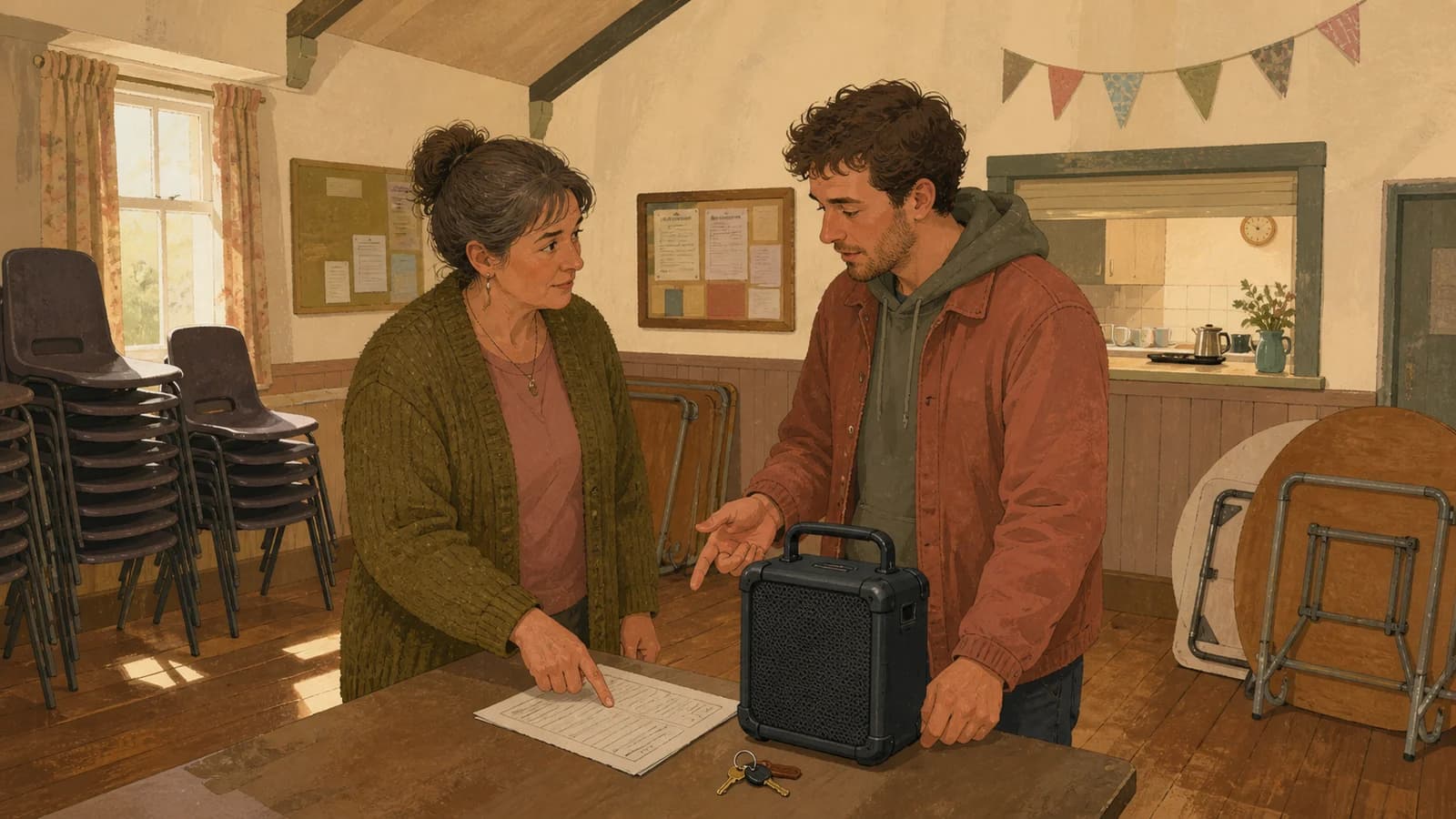
- Hiring a hall? The classes page says that an instructor who hosts classes "in venues, such as church halls or community centres" needs a music licence in place.
The sector body ukactive puts it the same way: fitness centre operators are liable for all classes on their premises, including freelance instructors' classes, and instructors are responsible for classes outside fitness centres.
So a Reformer studio owner licenses the studio, including visiting teachers' classes. A freelance yoga teacher who rents a village hall on Tuesday evenings needs their own licence for those sessions.
Keep a short handover note with any room hire:
| Record | Example entry |
|---|---|
| Premises and room | Village hall, main room |
| Sessions | Tuesday and Thursday 7pm, about 12 people |
| Music source | The provider or account you will play from |
| Whose licence covers it | Instructor's TheMusicLicence, or the hall's, with reference |
| What would change it | Extra classes, a new room, a new music source, filming |
Our village hall music licence checklist covers the hirer's side in more detail, and the gym music licence guide covers larger facilities.
Map every place music plays
A studio rarely has one music use. List each one before you ask for a quote:
| Where music plays | What it is | What to check |
|---|---|---|
| Reception and changing rooms | Background music | Background music on the premises licence |
| Mat, Reformer or yoga class | Class music | Classes on the premises licence, or the instructor's own |
| Hired hall | Your class in someone else's venue | Your licence, or written confirmation from the hall |
| Online or filmed class | Livestream or recording | A separate online licence for commercial music |
For online classes, PRS for Music's guidance for instructors on FitPro describes a separate licence for livestreamed and on-demand classes, which does not cover music in a physical studio.
The personal-Spotify trap
TheMusicLicence answers the public performance question. It doesn't change your streaming app's terms. Spotify's commercial use page says you can't play Spotify publicly from a business, and lists dance studios among its examples. Paying for Premium removes adverts; it doesn't make a personal account a business music source.
So a studio needs both: a music source that allows business use, and the right licence for the music that source plays.
Sonosfera for Pilates and yoga studios
Sonosfera streams its own original catalogue to venues, with calm playlists made for class flow that leave room for an instructor's cues. No PPL PRS licence needed for Sonosfera music under an active plan. Your Sonosfera subscription is your licence: Sonosfera's own catalogue isn't represented by, or licensed through, PPL PRS.
The scope is the business locations on your plan. At those locations you can play Sonosfera through reception, mat and Reformer classes and private sessions, film social clips with the music playing and livestream from the studio with it in the background. A class you teach somewhere else, such as a hired hall, is covered when that venue is a location on your plan. Radio, Spotify, a guest teacher's playlist or live music are separate sources, and each needs its own licence.
It's built for flow, breath and focus, not beat-matched workout mixes or named chart tracks. If your classes depend on familiar songs, TheMusicLicence plus a business music service is the route. If you want a calm, consistent soundtrack, hear music for Pilates studios or music for yoga studios. Sonosfera costs £14.99 a month per zone, or £149.90 a year (GB pricing page, checked 5 October 2026), with a 14-day free trial: see current UK pricing and what the certificate records.
Choosing music for the room
Licensing decides whether you can press play; the room decides what works. Build around the shape of the session:
| Session moment | What the music should do |
|---|---|
| Arrival | Help clients settle; warm, low-vocal |
| Warm-up | Add gentle structure without big changes |
| Main work or Reformer | Support movement without competing with cues |
| Transitions | Stay steady while equipment or positions change |
| Cool-down or savasana | Soften, or fade to silence |
Set the volume so clients can hear you at normal speaking level. Our guide to background music volume has a simple room check.
FAQ
Do I need a music licence for a yoga class?
Yes, if you play commercially released music. PPL PRS includes yoga among the classes TheMusicLicence covers. A studio's licence covers classes on its premises; if you teach in a hired hall, you usually need your own, from £345 a year + VAT for three weekly classes.
Does the gym's licence cover my class?
If you teach at a gym or studio that holds TheMusicLicence for classes on its premises, yes: PPL PRS says a premises licence that includes class music covers the classes held there. Ask the manager to confirm it includes class music. In a hired church hall or community centre, the instructor needs a licence.
How much is a music licence for a fitness instructor?
PPL PRS's July 2026 example is £345 a year + VAT for three classes a week over 50 weeks in a village hall or similar venue, which is £2.30 a class. In a gym or fitness centre the same timetable is £702 + VAT.
Can I use Spotify Premium in my classes?
No. Spotify says its service can't be played publicly from a business, and names dance studios as an example. Premium removes adverts but stays a personal account. Use a business music service.
Do I need a licence if I only play classical music?
Usually, yes. An old composition can be out of copyright, but the recording you play has its own rights, held by the performers and the record company. Unless the recording is cleared for business use, PPL's side of the licence still applies.
Do I need a PPL PRS licence to play Sonosfera in my studio?
No PPL PRS licence needed for Sonosfera music under an active plan. Your Sonosfera subscription is your licence: Sonosfera's own catalogue isn't represented by, or licensed through, PPL PRS. Any other music in the room, such as radio, Spotify or a guest playlist, needs its own licence.
Sources
- Fitness, exercise and dance classes music licence — PPL PRS Ltd, examples correct as of July 2026
- Gyms, fitness and dance studios music licence — PPL PRS Ltd, examples correct as of September 2026
- Fitness and dance music licence overview — PPL PRS Ltd
- Licensing support for gyms and leisure facilities — ukactive, licensing FAQ checked 5 October 2026
- Music licensing for fitness instructors — FitPro, guidance from the PRS for Music team
- Get a licence to play live or recorded music — GOV.UK
- Spotify for public or commercial use — Spotify
- Sonosfera Terms of Service, sections 2 and 9 — Sonosfera