Use Sonosfera for eligible catalogue background playback in United Kingdom, then keep DJs, live music, radio, uploaded tracks, venue terms, and local permissions in their own checks.
Sonosfera was started by a salon operator who got caught out by PPL/PRS licensing letters and built the music platform they wished existed. The team behind this blog has spent years inside hair and beauty businesses, clinics, and hospitality venues — booking the bills, dealing with the licensing letters, and learning the hard way that most Spotify playlists don't work for a professional environment.
Music Licensing for Dentists, Vets & Medical Practices
By Sonosfera Team
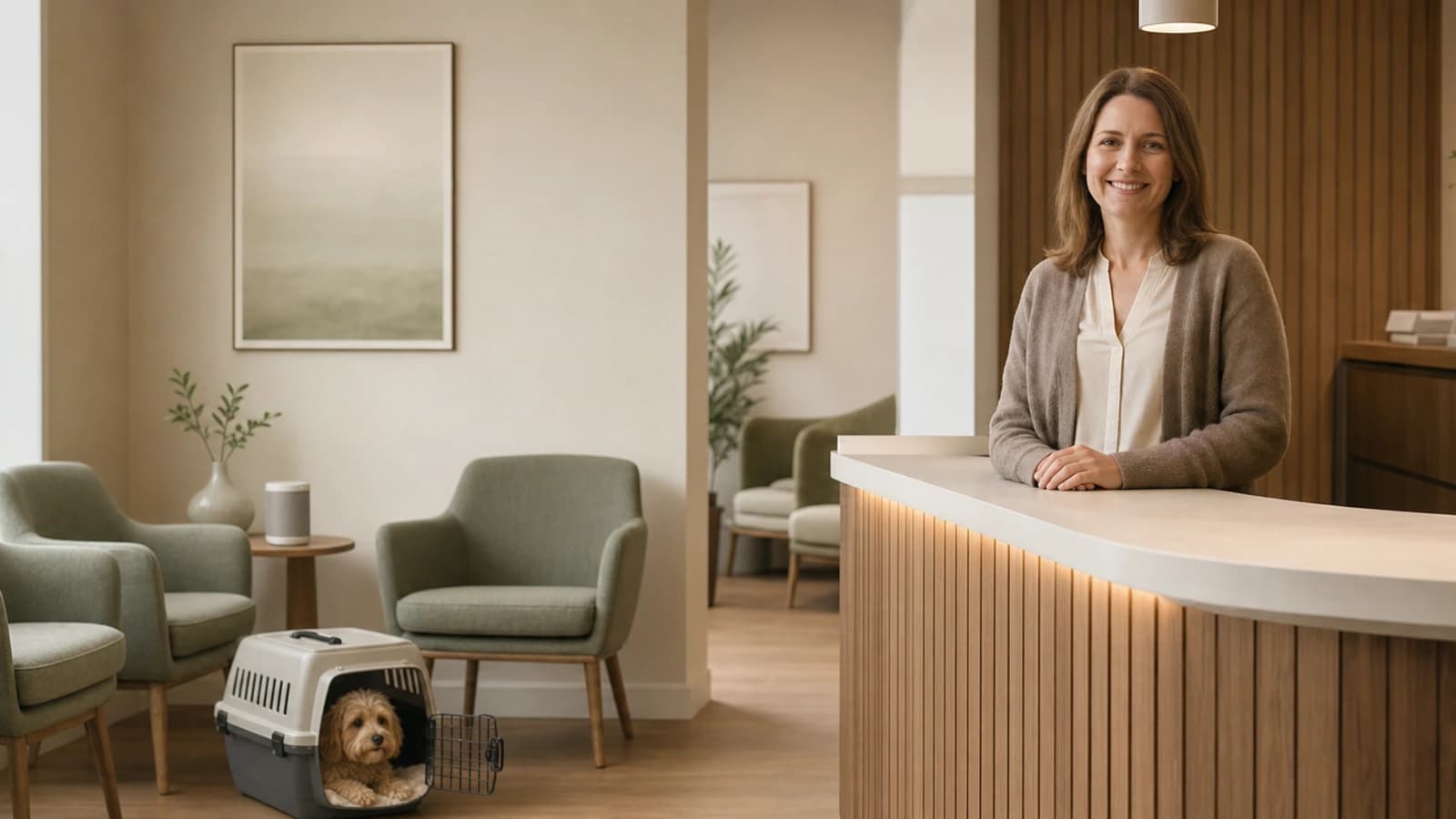
Direct answer: UK dental, vet, and private medical practices need a clear music-source plan for waiting rooms, reception, and staff-heard areas. For Sonosfera's clinic route, start with background music for clinics, check UK pricing, and keep separate paperwork for radio, TVs, DJs, live music, or third-party playlists.
Playing background music in a waiting room sounds like the simplest thing in the world — until you wonder whether the practice down the road got a letter about it. If you run a dental surgery, a veterinary clinic or a GP/private medical practice in the UK and you play music where patients or clients can hear it, you will usually need a clear music licence or written commercial-use permission for the catalogue you play. The good news is that the rules are clearer than the marketing around them suggests.
This guide is for UK practice owners and managers who want to play music in patient-facing areas without guessing. It explains what TheMusicLicence covers, when a direct-licensed or royalty-free catalogue may change the permission route, and how to weigh up a provider.
Fast facts
Question
Practical answer
Do UK dental and clinic waiting rooms usually need TheMusicLicence?
PPL PRS says doctors, dentists, clinic reception areas, waiting rooms and staff areas will usually need a music licence when they play music.
Do vet practices have a separate official page?
Yes. PPL PRS has a veterinary and animal services page, so do not rely on a generic retail or salon rule.
Does Spotify cover a waiting room?
Spotify's consumer terms grant personal, non-commercial access, so do not treat a personal account as practice music permission.
In the UK, playing recorded music in public — which includes a waiting room, treatment room within earshot, or reception — generally counts as a "public performance." Two sets of rights are involved:
PRS (Performing Right Society) represents songwriters, composers and music publishers.
PPL (Phonographic Performance Limited) represents record companies and performers — the people behind the actual recording.
For most businesses both apply, which is why PPL and PRS jointly offer a single combined licence called TheMusicLicence. One purchase, both bodies covered. You can check whether your setup needs it, and what the current cost is, directly at PPL PRS health care or PPL PRS veterinary and animal services — rates depend on factors like floor area, waiting-room seats and how the music is used, so confirm the figure for your practice rather than relying on a number you saw quoted elsewhere.
A handful of narrow exceptions exist (for example, certain healthcare settings have historically had specific arrangements), but the safe default for a dental, vet or private medical practice playing commercial radio or playlists is: assume you need it, then verify.
The one thing most "no licence needed" claims really mean
A lot of background-music providers advertise that their service is "PPL/PRS-exempt", "non-PPL/PRS" or "royalty-free." That can be true for a defined catalogue and use — but it is worth understanding why, because it changes what you are buying.
These services work by using music whose commercial-use scope is handled directly by the provider: independently produced tracks, royalty-free libraries, or AI-generated music with written terms. The important thing is not the marketing phrase; it is the exact licence wording for the catalogue you actually play.
The practical takeaway: you can either license mainstream chart music through TheMusicLicence, or play a curated business catalogue with written commercial-use scope. What you cannot do is play Spotify or commercial radio in your waiting room and assume a consumer streaming subscription covers the business use — Spotify's own terms grant personal, non-commercial access.
Comparing UK background-music providers
The table below lists UK provider routes and the licensing position to verify. Prices change, so this page links to current provider or comparison pages instead of hardcoding figures that can go stale.
Provider pricing page or Sonosfera comparison page
Business music licensing and repertoire coverage
A few providers — including Startle, Imagesound and Soundtrack — sell on a quote or demo-led basis without standard public pricing. Notably, Soundtrack's own UK guidance states that public performance rights are not included and that businesses should obtain TheMusicLicence where it applies — a useful reminder that a music subscription and a performance licence are two different things.
How Sonosfera fits
Sonosfera is a background-music service built for businesses that want calm, on-brand sound with clearer catalogue scope. The catalogue is produced specifically for commercial playback, so eligible Sonosfera playback uses Sonosfera's written catalogue terms rather than a personal streaming subscription.
To be clear about scope: that covers playback of the Sonosfera catalogue. It does not stretch to mainstream chart music, commercial radio, Spotify or YouTube playlists, DJs, live performances, or your own uploads — if you also play any of those in a public area, the usual PPL/PRS rules still apply to them. For a practice that just wants a steady, unobtrusive waiting-room atmosphere, that boundary is rarely a problem.
Licensing aside, the music itself shapes how the room feels. A few general pointers most practices land on:
Keep the volume low. Background music should sit under conversation, not compete with it. Reception staff should be able to talk to a patient without raising their voice.
Favour steady, mid-tempo tracks. Many practices prefer gentle, predictable rhythms over high-energy or lyric-heavy songs. Instrumental playlists are a common default in dental and vet waiting rooms for exactly this reason.
Avoid abrupt changes. Sudden loud transitions or jarring genre shifts can feel disruptive before an appointment.
Match the room. A vet's clinic with nervous animals, a paediatric dentist, and a cosmetic clinic all have slightly different moods. Pick a tone that suits your patients, not just your own taste.
These are general comfort principles, not medical claims — but they cost nothing to apply and tend to make the room easier for patients, clients and staff to share.
FAQ
Does a Spotify or Apple Music subscription cover my waiting room?
No. Consumer streaming subscriptions are licensed for personal, not business, use. Playing them in a public area of your practice does not create business playback permission. You would need either TheMusicLicence for mainstream repertoire or a dedicated business service with written catalogue scope.
What is TheMusicLicence and what does it cover?
TheMusicLicence is a single combined licence offered jointly by PPL and PRS for Music. It covers both the songwriting/publishing rights (PRS) and the recording/performer rights (PPL) for playing commercial music in public. Confirm whether you need it and the current price on the relevant PPL PRS sector page for health care or veterinary and animal services.
How can a provider say a PPL/PRS route may not be needed?
Because the provider may control the relevant rights for its own catalogue directly. Royalty-free libraries and AI-generated catalogues can handle rights through provider terms rather than mainstream collecting-society repertoire. It is an alternative route for that catalogue, not an exemption from copyright law — and it only applies to the provider's own written scope, not anything else you might play.
Are healthcare or veterinary practices exempt?
There are some narrow, setting-specific arrangements in UK healthcare, but you should not assume your practice is exempt. The safest approach is to check your specific situation with the licensing authority before relying on any exemption.