Lash Studio Music: The £335 Mistake Most Techs Make
You’re playing Spotify during a two-hour lash extension appointment. It feels harmless, but it could cost you a £335 fine. Here is how to play music legally.
Sonosfera was started by a salon operator who got caught out by PPL/PRS licensing letters and built the music platform they wished existed. The team behind this blog has spent years inside hair and beauty businesses, clinics, and hospitality venues — booking the bills, dealing with the licensing letters, and learning the hard way that most Spotify playlists don't work for a professional environment.
Lash Studio Music: The £335 Mistake Most Techs Make
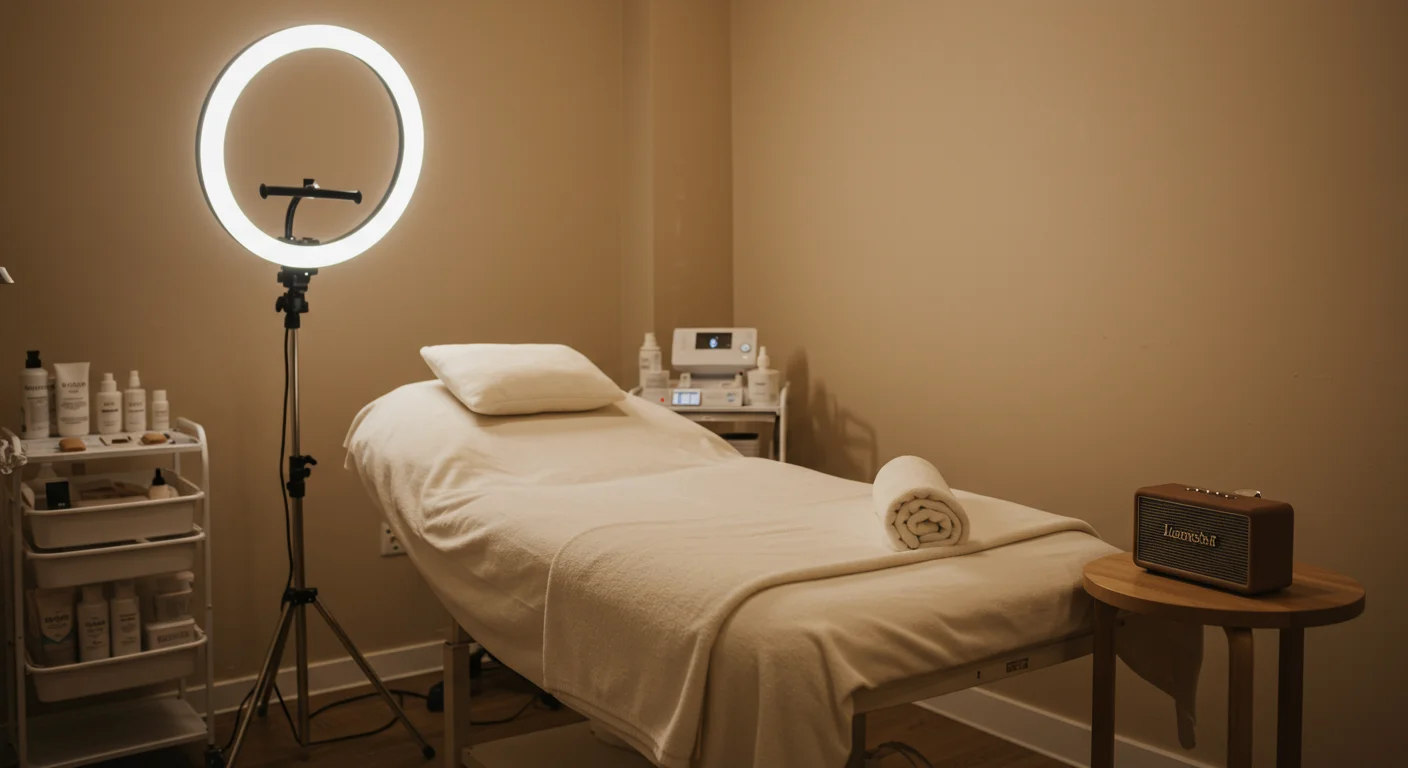
You are halfway through a two-hour volume lash set. Your client has their eyes taped shut. The room is quiet except for the hum of your ring light and your personal Spotify playlist running from an iPad. It feels perfectly normal. It is also completely illegal.
Lash and brow technicians face a unique problem. Your treatments take a long time, require absolute stillness, and involve vulnerable clients who cannot open their eyes.
Silence is awkward. Snoring is worse. You need background noise to mask the sound of your own breathing, stomach rumbles, and the traffic outside.
But grabbing your phone and playing your favourite playlist is a financial trap. Most independent beauty professionals do not realise they are breaking copyright law until a brown envelope arrives in the post.
Here is exactly what you need to know about lash studio music, the fines you are risking, and what you should actually be playing to keep clients coming back.
Why the right music matters for lash extensions
Lash extensions are an exercise in endurance. A client is lying flat on their back for 90 to 120 minutes.
If your room is dead silent, every tiny sound becomes amplified. The clink of your tweezers. The squeak of your stool. The client becomes hyper-aware of their own swallowing. This physical tension ruins the experience. It also makes your job harder, because a tense client has fluttering eyelids.
Music solves the tension problem, but it has to be the right kind of music.
You want your clients to experience the "lash nap". This is the holy grail of a lash appointment, where the client falls into a light sleep and wakes up with a full set of lashes. To achieve this, your music needs a consistent tempo.
Sudden drops, heavy bass, or aggressive tempo changes pull the brain out of a resting state. It causes microscopic muscle twitches in the face. If you have ever struggled to isolate a natural lash because the client's eye will not stop shaking, your playlist is to blame.
Key takeaway: Lash studio music is not just for atmosphere. It is a functional tool that controls your client's heart rate and facial muscle tension.
Can you just play Spotify in your lash studio?
No. This is the most common mistake in the beauty industry.
Spotify, Apple Music, and YouTube Music are consumer platforms. When you sign up, you agree to their terms and conditions. Section 4 of Spotify's terms explicitly states that the service is for "personal, non-commercial use only".
The moment you play that music in a space where you are conducting business, it becomes a public performance.
To play commercial music legally in a UK business, you need permission from the copyright holders. This permission is handled by two organisations: PPL (who represent the record labels and performers) and PRS for Music (who represent the songwriters and publishers).
They collect these fees jointly through a system called TheMusicLicence.
If you play music without this licence, you are committing copyright infringement. The starting price for a small salon or single beauty room is around £335 per year. If you get caught playing music without paying this fee, PRS can backdate your charges for up to six years.
You probably think you are too small to get caught. You work in a rented room above a hairdresser, or you have a log cabin at the bottom of your garden. But inspectors do not need to knock on your door. They just have to watch your Instagram stories.
If you post a time-lapse of a brow lamination and a copyrighted song is playing clearly in the background of your studio, that is all the evidence they need. We have covered the legal reality of playing Spotify in your salon in detail, and the rules apply equally to solo technicians.
The true cost of background music
Let us look at the numbers. Paying for a commercial licence directly through PPL PRS is an expensive overhead for an independent lash tech.
Here is what you actually pay if you try to do this the traditional way, compared to using a dedicated business streaming service.
Expense
Traditional Setup
Sonosfera
Streaming Subscription
£131.88/year (Spotify Premium)
Included
PPL PRS Licence
£335.00/year (Minimum)
Included
Commercial Certificate
None (Still illegal)
Provided instantly
Total Annual Cost
£466.88
£167.88
You are overpaying by nearly £300 a year for a system that still breaches Spotify's terms of service.
Sonosfera costs £19.99 a month. It includes all your commercial licensing, requires no PPL or PRS fees, and is built specifically for UK businesses. You can try it free for 14 days.
The best music genres for brow and lash studios
If you want to create a space that feels premium, you need to move away from generic spa music.
Nobody wants to listen to pan flutes and whale sounds for two hours. It feels clinical. Your clients are usually women aged 18 to 45 who want to feel stylish and relaxed, not like they are in a medical waiting room.
Here are the specific vibes that work best for precise beauty treatments.
1. Lo-Fi Beats (60-80 BPM)
Lo-fi hip hop and chillhop are perfect for lash studios. The steady, repetitive drum loops mimic a resting heart rate. The lack of harsh vocals means the client's brain does not try to follow a narrative. This is the fastest way to induce a lash nap. Sonosfera's Lofi Focus station is built entirely around this concept.
2. Acoustic R&B and Soul
If you want something warmer and more recognisable, stripped-back acoustic tracks work beautifully. They provide a high-end, boutique feel without the aggressive production of standard pop music. Look for tracks with a BPM under 90. Our Soulful Lounge vibe is designed specifically for this atmosphere.
3. Ambient Electronic
Soft, pulsing electronic music creates a modern, clean environment. It masks background noise exceptionally well because of the continuous synth layers. This is ideal for brow bars located in busier environments, like a chair within a bustling hair salon. Deep House Clean offers this energy without crossing into nightclub territory.
If you rent a chair or a room in an existing salon, do not assume the owner's licence covers you.
According to UK law, the person playing the music is responsible for the licence. If you bring your own speaker into your rented room and play your own music, you need your own licence. The salon owner's PPL PRS licence only covers the music they provide in communal areas.
The same applies to home salons. It does not matter if your lash bed is in your spare bedroom or a garden outbuilding. If a client is paying you for a service, the space is a commercial environment. Playing the radio or a streaming service requires a business licence.
This is why a service with licensing built-in is the safest route for independent technicians. You get a commercial music certificate in your name. If an inspector ever contacts you, you simply show them the certificate and they close the file.
Automating your studio atmosphere
When you have back-to-back infills, you do not have time to act as a DJ.
The smartest lash techs use dayparting. This means the music automatically shifts based on the time of day. You need a different energy for your 9:00 AM client than you do for your 7:00 PM client.
With dayparting scheduling, you can set your system to play bright, acoustic music in the morning. By 2:00 PM, when the post-lunch slump hits, the system transitions to steady lo-fi beats. By the evening, it shifts to a sophisticated lounge vibe to help clients decompress after work.
You set this up once. After that, the music handles itself.
For studios that want total control over their brand, there is also Sonosfera Studio. We build bespoke, AI-curated custom music specifically for your business, giving your studio a completely unique sound that no competitor can copy.
Frequently Asked Questions
Q: Do I need a music licence if I only play royalty-free YouTube playlists?
A: Using YouTube for commercial background music violates YouTube's terms of service. Many "royalty-free" tracks on YouTube actually contain hidden copyrighted samples, which still require a PPL PRS licence. We explain this trap in our royalty-free vs licensed music guide.
Q: Can I just play the radio in my lash room instead?
A: No. Playing a traditional radio broadcast in a commercial space still requires a full PPL PRS licence. The £335 minimum annual fee applies whether you are playing Spotify, a CD, or BBC Radio 1.
Q: What happens if a PPL PRS inspector catches me?
A: They will demand you purchase a licence immediately. They also have the legal authority to backdate fees for up to six years of unlicensed music use, and can apply additional penalty charges. We have documented real cases of music licence fines affecting small businesses.
Q: Does Sonosfera work on my phone or tablet?
A: Yes. You can run Sonosfera directly from any web browser on your phone, tablet, or laptop. You just connect your device to your Bluetooth speaker or sound system, select your vibe, and press play.
Stop risking a fine. Start saving money.
You have a business to run. You should be focusing on your isolation technique and client retention, not worrying about copyright law and inspector visits.
A traditional music licence costs you £335 a year, and that does not even include the cost of your streaming subscription. It is an unnecessary tax on your small business.
Stop risking a fine. Start saving money.Try Sonosfera free for 14 days.£19.99/month. All licensing included. Cancel anytime.
Ready for Legal Background Music?
Fully licensed for commercial use. No PPL/PRS fees, no copyright worries. From £19.99/month.