Short answer: Treat foyer and bar background music as a front-of-house operation, not as a shortcut to theatre music rights. Record which public areas hear the house source, then route auditorium, production, walk-on, interval, exit and dramatic uses to the appropriate licensing or production contact.
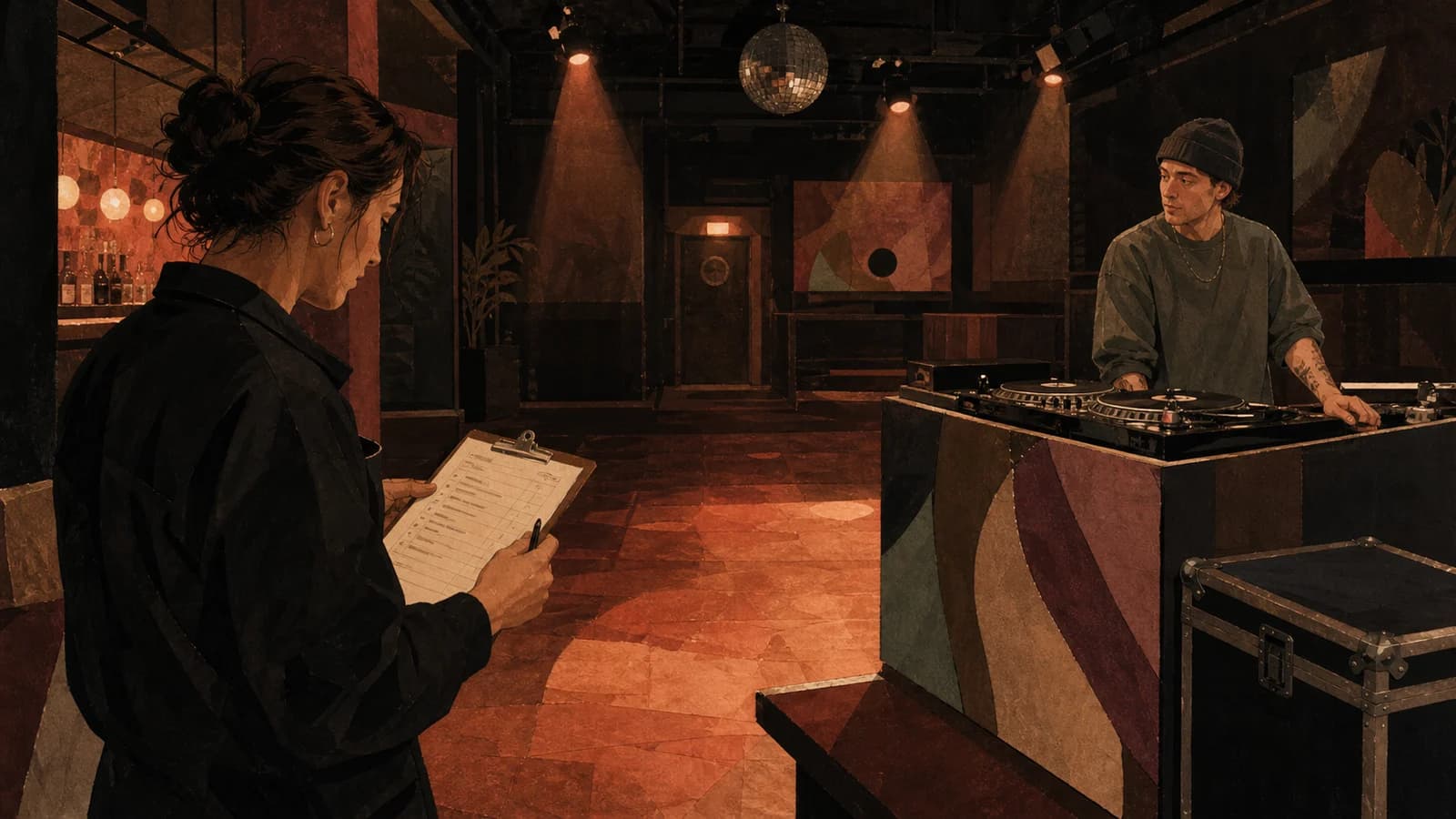
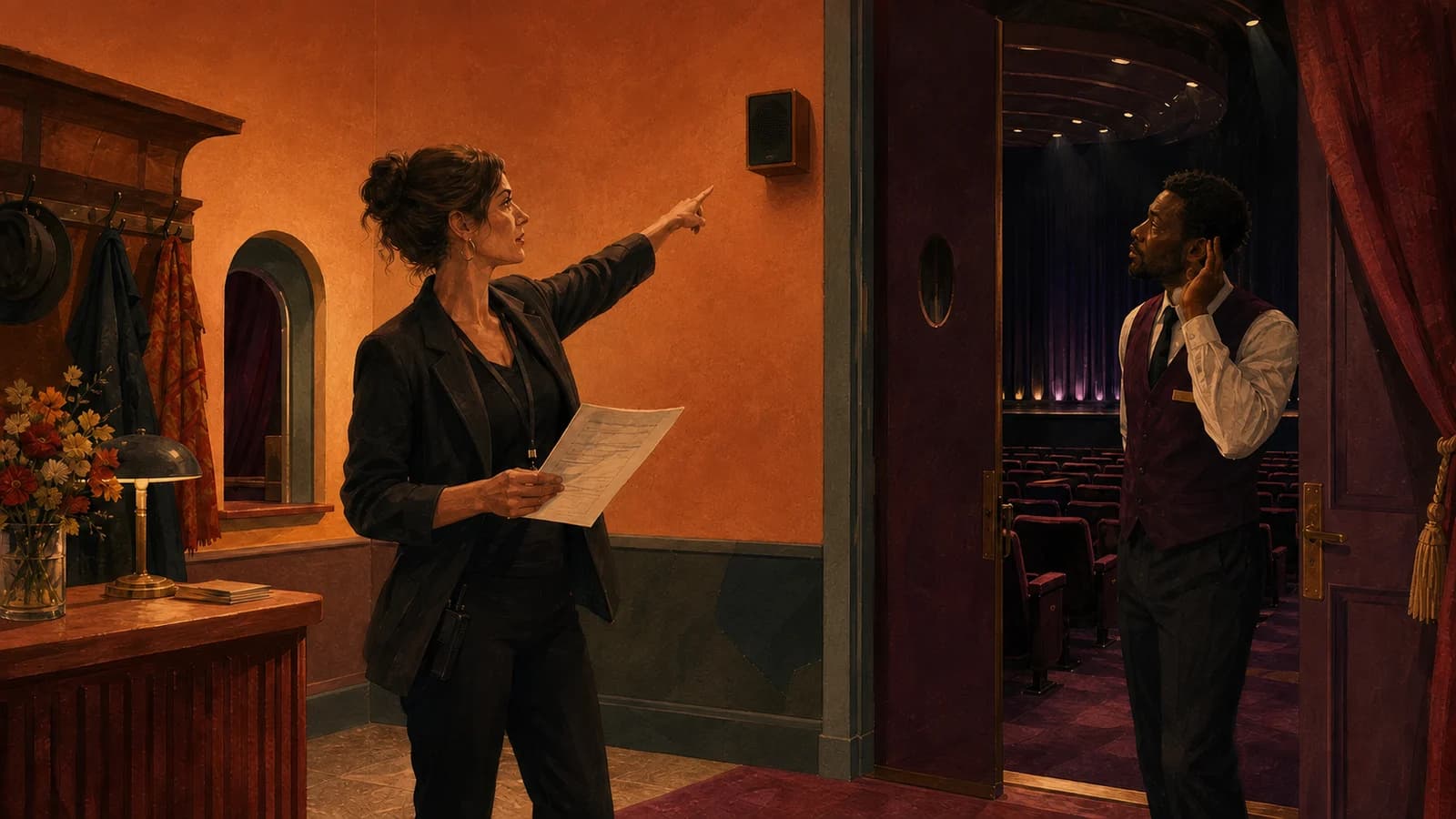
Illustration: a venue music handover.
Draw the front-of-house boundary
| Area or moment | Front-of-house plan | Escalation trigger |
|---|---|---|
| Foyer before doors | Approved background source or deliberate silence | Sponsor video, live performer or hired-event source |
| Bar/café | Its own approved background plan | Independently managed concession |
| Auditorium before curtain | Separate documented use | Production or venue licence question |
| Interval | Running-order decision | Music tied to the show or special event |
| Exit | Named source and stop time | Recorded performance, encore or show material |
| Stage/backstage | Outside foyer plan | Production, dramatic, live or recorded use |
The current PPL PRS theatre page distinguishes foyer and bar areas, auditorium uses, interval and exit music, dramatic presentations and rights that may need direct licensing. Read that source for the actual production, and send grand- or small-rights questions to the appropriate producer, venue specialist or rights holder.
For a university theatre, the campus music-use inventory gives estates, societies and event organisers separate ownership rows.
Give front of house its own source label
The foyer player should be recognisable without opening a personal account or guessing which laptop is live. Record:
- source and account owner;
- foyer/bar zones;
- pre-show, interval and post-show status;
- normal level-check position;
- who can stop it for an announcement;
- ordinary reset after the audience leaves.
Avoid using a production laptop as the casual foyer source. It makes boundaries and handovers harder to see.
Use a running-sheet checkpoint
Add a “music source” column beside doors, beginners, interval and clear-down. The duty manager should be able to answer three questions at each checkpoint: what is playing, where is it audible, and who owns the next change.
If the production wants music in the auditorium or tied to the work, stop treating it as a foyer decision. Send it to the producer, rights contact or venue specialist under the current theatre guidance.
Where Sonosfera fits
Sonosfera can support an approved foyer or bar background zone using its own catalogue. Current product information lists independent streams per zone, venue-mood playlists, daypart scheduling and phone control of zone vibe and volume.
It does not provide rights for production music, adaptations, dramatico-musical works, walk-on material, live performance or outside recordings. Keep that boundary visible on the running sheet. The events guide is relevant when a theatre hires out a foyer, and current UK plans can be checked after the approved zones are known.
Reset after the performance
- stop production and hired-event sources in their own systems;
- confirm auditorium playback is off;
- restore only the approved foyer/bar source or silence;
- listen at the auditorium doors for spill;
- remove temporary cables and personal devices;
- record an unresolved source for the next duty manager.
Can foyer music use the show's soundtrack?
Do not assume so. Music tied to a production can involve rights and agreements beyond ordinary front-of-house background playback. Ask the producer or rights holder.
Is interval music part of the foyer plan?
Only if the venue has explicitly documented it that way. Auditorium interval music and foyer/bar music can have different owners and uses, so keep separate rows.