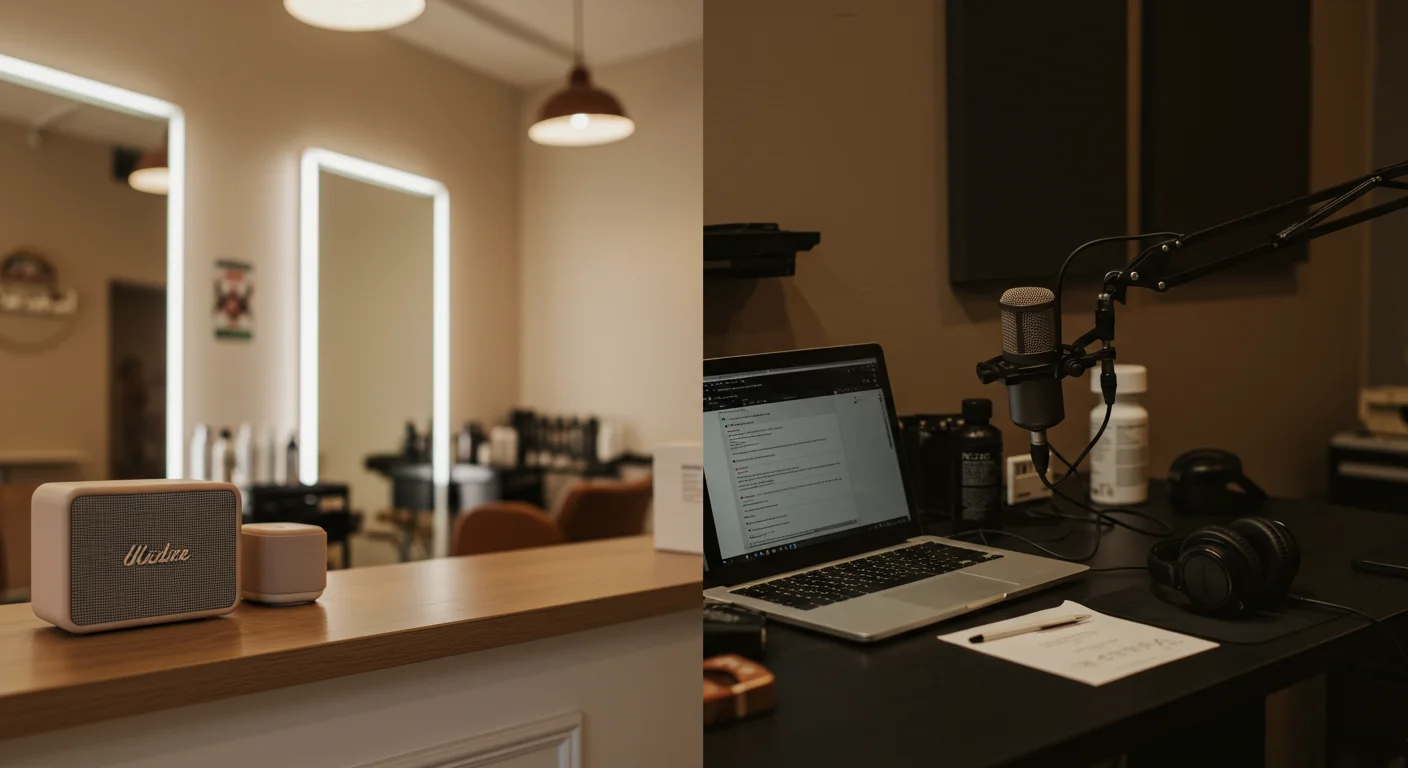
Use Sonosfera for eligible catalogue background playback in United Kingdom, then keep DJs, live music, radio, uploaded tracks, venue terms, and local permissions in their own checks.
Sonosfera was started by a salon operator who got caught out by PPL/PRS licensing letters and built the music platform they wished existed. The team behind this blog has spent years inside hair and beauty businesses, clinics, and hospitality venues — booking the bills, dealing with the licensing letters, and learning the hard way that most Spotify playlists don't work for a professional environment.
Epidemic Sound Business Pricing in 2026: What UK Venues Actually Need
By Sonosfera Team · Updated 21 July 2026
"Epidemic Sound Business" sounds like one product. It is two, and confusing them is the costliest mistake a UK venue makes on this page. The $30-a-month plan everyone quotes licenses music for content you publish — adverts, social posts, client videos. The music you play through the speakers of a salon, café, or gym is a separate Epidemic Sound service, sold by quote through local partners.
On 21 July 2026, Epidemic Sound listed the Business plan at $30 per month billed as $360 annually, or $75 month to month. That fee covers marketing, social media, internal communications, influencer work, and client productions within the plan limits. It is not, by default, the price for all-day background playback in a physical shop.
So a UK operator is really weighing three routes, not one: the Epidemic Sound Business content plan, Epidemic Sound's quote-led in-store service, and venue-first services such as Sonosfera that are priced for the room rather than the edit.
Published business-music prices at a glance
The table prints the prices a buyer is likely to meet on comparison pages, but it also shows the market and billing basis. Dollar prices from US services are not UK quotes, and a content-production subscription is not the same product as a venue-music subscription.
Provider or plan
Published monthly price
Billing and market note
Relevance to a UK venue
Epidemic Sound Business
$30 with annual billing; $75 month to month
$360 charged annually at the lower rate; business-content plan
Use for eligible business and client content. Do not treat this as the in-store quote.
Sonosfera
flat
UK price supplied for this comparison
Built for background playback of the Sonosfera catalogue in a business venue.
SiriusXM Music for Business
$26.95
US service; taxes and fees may apply
Useful US benchmark, not a UK licensing route.
Mood Media
$35 for Signature monthly; $31.50 monthly equivalent on yearly billing
US pricing; Fundamentals is listed from $17/month
Check the UK offer separately rather than converting the US figure.
Not a UK substitute, but a useful comparison for a venue-first product.
Prices were reviewed on 21 July 2026. Taxes, currency, hardware, zones, locations, turnover limits, and annual-payment discounts can change the real total. The separate Epidemic Sound in-store service did not publish a self-serve price on the page checked; it routes buyers to a partner quote.
Epidemic Sound Business versus Epidemic Sound in-store
Epidemic Sound uses the word "business" across products that solve different jobs, which is where much of the search confusion begins.
The Business plan at $30 or $75 per month is for organisations producing content. Its plan page highlights marketing, social media, internal communications, client work, influencer marketing, and a two-user allowance. If your salon is making paid Instagram adverts or your agency is producing client videos, that is the relevant comparison.
The in-store service is for music heard in physical commercial spaces. Epidemic Sound says this offer includes public-performance rights for its supplied catalogue and is delivered through professional partners in each territory. Because the company does not publish a standard UK self-serve price for that service, ask for the monthly fee, hardware cost, contract length, number of zones, and written UK rights scope before comparing it with a flat-price venue service.
This distinction changes the buying decision. A low annual content price is not a saving if it does not cover the activity you plan to carry out.
Where Sonosfera differs
Sonosfera starts with the physical venue rather than the video edit. It costs per month flat and is designed for staff to run as background music in salons, shops, cafés, clinics, and similar spaces.
For UK licensing, the scope is specific: Sonosfera-only playback does not require PPL/PRS because the catalogue is fully AI-generated and rights-controlled. That statement applies to music played from Sonosfera. If the premises also uses mainstream tracks, radio, a consumer streaming account, outside playlists, a DJ, or live performers, assess those uses separately.
Sonosfera is therefore the closer comparison when your question is "What can I play in the room?" Epidemic Sound Business is the closer comparison when your question is "What can I put behind the content my business publishes?" Epidemic Sound's separate in-store offer may compete for the first job, but you need its UK quote before you can compare totals.
To inspect the live Sonosfera offer without hard-coding a checkout route, use country-aware UK pricing. For venue-specific planning, the background music for retail guide covers the day-to-day playback side.
What PPL and PRS mean for a UK business
When a UK business plays mainstream, commercially released music for customers or staff, it will often need to check TheMusicLicence with PPL PRS. PPL represents record companies and performers for the recording; PRS for Music represents songwriters, composers, and publishers for the underlying work. TheMusicLicence brings those permissions together for many types of public playback.
The fee depends on the premises and use, so there is no responsible single number to quote for every salon, shop, café, gym, or waiting room. Ask PPL PRS for the current position for your actual setup.
One licensing caveat applies to every provider in this article: terms such as "royalty-free", "direct-licensed", and "license-inclusive" are each provider's own description of its catalogue and contract. They are not a blanket conclusion about everything played at your premises. Keep the subscription evidence and written scope, and review radio, DJs, live performances, consumer-streaming accounts, and outside playlists separately.
Use the UK background-music comparison for a side-by-side view, or read the longer guide to the best business music services in the UK. Compare each service on catalogue fit, number of locations or zones, hardware, cancellation terms, and written licensing scope — not only the smallest number in the price column.
Frequently asked questions
How much is Epidemic Sound Business per month in 2026?
As checked on 21 July 2026, the Business plan was $30 per month when billed annually at $360, or $75 with monthly billing. Epidemic Sound displayed those figures in US dollars on the official page checked, so confirm the currency, tax, and final checkout total for a UK account.
Is Epidemic Sound's $30 Business plan for music in a shop?
Do not assume so. The published Business subscription is presented as a plan for soundtracking business and client content. Epidemic Sound has a separate in-store music service for physical commercial spaces, delivered through partners and priced by quote. Ask Epidemic Sound to confirm the exact UK venue use in writing.
Which is cheaper: Epidemic Sound or Sonosfera?
For the published headline, Sonosfera is per month flat, while Epidemic Sound Business is $30 per month on annual billing or $75 month to month. The figures do not buy the same use. Compare Sonosfera with Epidemic Sound's in-store quote for venue playback; compare Epidemic Sound Business with other content-licensing libraries for videos and advertising.
Do I still need TheMusicLicence if I pay for a music service?
It depends on the catalogue and everything else played at the premises. Check PPL PRS for mainstream recorded music and assess radio, third-party playlists, DJs, and live music separately. For Sonosfera, the catalogue-specific position is set out above. For Epidemic Sound in-store or another provider, keep the written UK scope supplied with the contract.
What should I ask before signing an in-store music contract?
Ask for the price including VAT, the minimum term, cancellation process, hardware cost, zone or location definition, offline-playback support, and a written statement of which UK public-performance rights the supplied catalogue covers. Then compare that answer with the way your staff actually play music.