Temporary music licence in Australia: what OneMusic event organisers should check
Organising an event? Learn what a temporary music licence in Australia covers, how OneMusic applies, and how to stay compliant without the legal headache.
By Sonosfera Team·Background music for Australian businesses··Updated
Key Takeaways
Most public or commercial events in Australia need permission to play recorded music, even free or charity ones.
OneMusic Australia bundles the two rights you need — APRA AMCOS (the songwriters) and PPCA (the recording).
A personal Spotify or Apple Music account does not cover public event playback.
The licence category depends on event type, audience size and duration, so check OneMusic before you book.
OneMusic only covers the music rights — live bands, DJs and cover acts may still need their own arrangements.
Use Sonosfera for eligible catalogue background playback in Australia, then keep DJs, live music, radio, uploaded tracks, venue terms, and local permissions in their own checks.
Sonosfera was started by a salon operator who got caught out by PPL/PRS licensing letters and built the music platform they wished existed. The team behind this blog has spent years inside hair and beauty businesses, clinics, and hospitality venues — booking the bills, dealing with the licensing letters, and learning the hard way that most Spotify playlists don't work for a professional environment.
Temporary music licence in Australia: what OneMusic event organisers should check
By Sonosfera Team
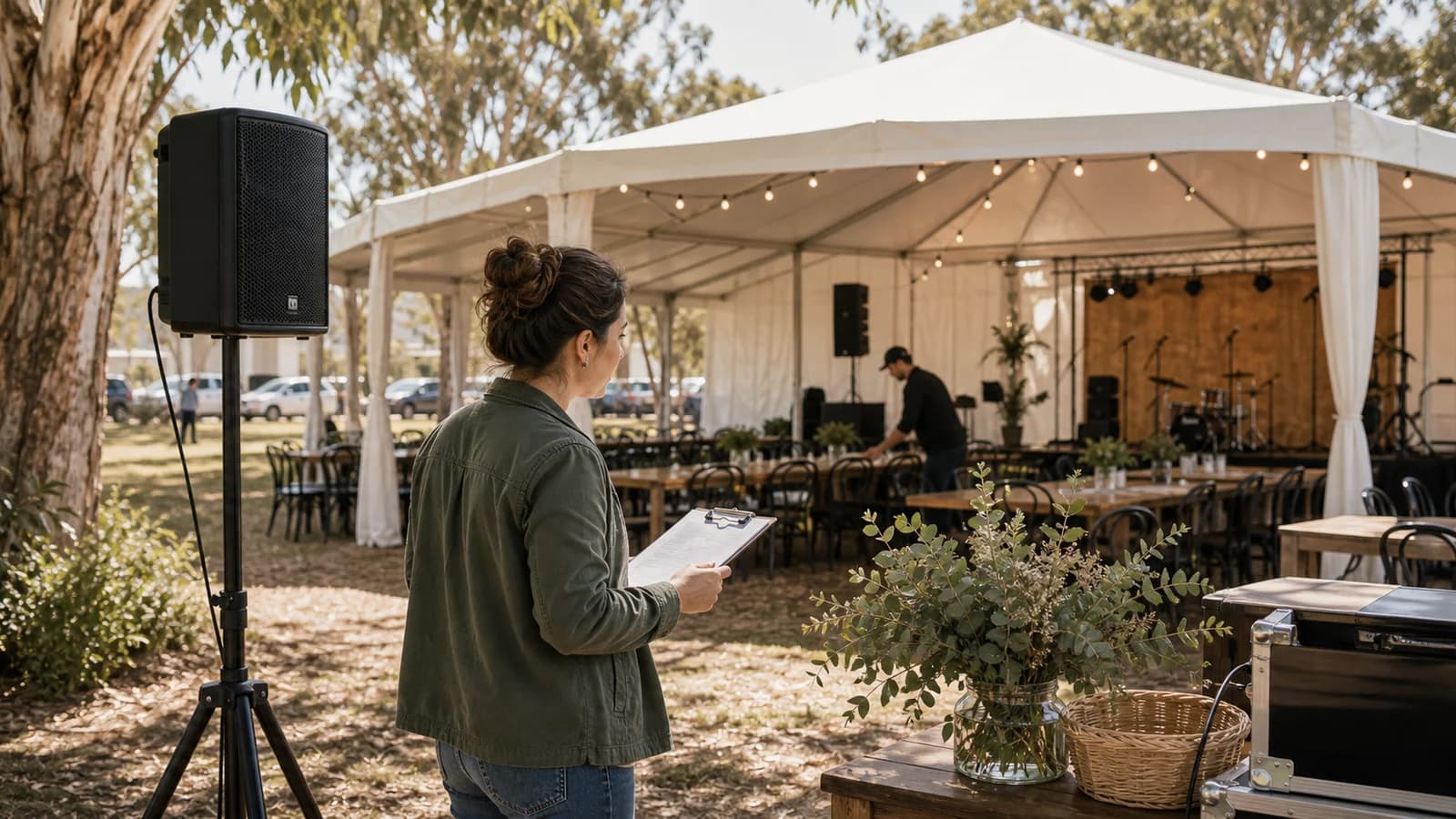
Direct answer: Australian event organisers should check OneMusic before playing protected music in public, because OneMusic is the APRA AMCOS and PPCA licensing initiative and event schemes can depend on the event type, music use, audience, and timing. Sonosfera can help only for eligible Sonosfera catalogue playback in ambient zones; it does not replace OneMusic, venue permission, DJ/live-music arrangements, local event permits, or any music outside Sonosfera. If your event is a fundraiser, start with background music for charity events; for maker markets use markets and craft fairs; for temporary hospitality use pop-up bars, then check current Australia short-term pricing only for the Sonosfera catalogue part.
If you are putting on a one-off event in Australia — a pop-up market, an exhibition, a launch night, a community fair — there is a question that is easy to leave until the week before doors open, and easy to get wrong: are you allowed to play the music?
The honest answer is that it depends, and the wrong assumption is expensive. Plenty of organisers assume the venue's paperwork covers them, or that a small free event slips under the rules, or that the Spotify account on their phone is enough. None of those are safe defaults. In Australia, the body that handles event music permissions is OneMusic Australia, and a short check with them before you commit is usually all it takes to stay on the right side of copyright.
This guide is a plain-English overview for event organisers, promoters and venue hirers planning short-term public gatherings in Australia. It is not legal advice — your exact obligations depend on the facts of your event, and you should confirm them directly with OneMusic. You can also browse the Sonosfera catalogue to see what licensed commercial background music looks like, or use the shorter Australia temporary music licence planning page.
Key takeaways for Australia temporary music licences
OneMusic is the practical first stop for many Australian event music questions because it brings APRA AMCOS and PPCA licensing together.
The official OneMusic event scheme page says events on or after 1 January 2025 use the current event scheme resources, including ticketed music events and eligible temporary music events.
Do not map one event type blindly to another. A market, exhibition, ticketed music event, live performance, dance floor, or background-only setup can sit in a different route.
A personal Spotify, Apple Music, YouTube Music, or radio source does not become an event licence just because the organiser pays for it.
Sonosfera should be treated as a controlled catalogue source for eligible ambient playback, not as a replacement for OneMusic or outside music permissions.
Fast route check before you ask for a price
Event situation
First route to check
Sonosfera fit
Ticketed music event, concert, DJ-led event, or dance-focused night
OneMusic event scheme and event statement resources
Not a replacement for the event licence or outside music rights
Community fair, exhibition, maker market, or vendor hall
OneMusic temporary/event category plus venue and local event permissions
Ambient music in reception, entry, queue, or stall zones
Confirm OneMusic position and source of playback
Sonosfera may fit when the approved source is the Sonosfera catalogue
Why public events need a music licence at all
A music licence is simply permission to play copyrighted music in public. Under Australian copyright law, performing or playing a protected work to the public requires the rights holders' permission — and "in public" is broader than people expect. It can apply whether or not you sell tickets, whatever the size of the room, and regardless of whether the event raises money for charity.
The common myth is that small, free or charitable events are automatically exempt. They usually are not. A wedding reception in a private home is a genuinely different case from a free market in a hired hall — the second is a public setting, and playing recorded music to that crowd is a public performance.
Here is the part that trips people up most. Recorded music carries two separate copyrights, and you need both:
The composition — the song itself: the melody, lyrics and underlying work. In Australia this is represented by APRA AMCOS, on behalf of songwriters, composers and publishers.
The sound recording — the specific studio recording you are actually playing. This is represented by PPCA, on behalf of record labels and recording artists.
Play a recorded track at your event and you are using both at once. This is exactly the gap OneMusic Australia is built to close: it is the joint licensing initiative of APRA AMCOS and PPCA, so a single OneMusic event licence can cover both rights for the relevant category instead of you chasing labels and publishers individually.
What "playing music without a licence" actually risks
It is tempting to assume a small event is too minor to matter. That is not a reliable plan. Australian copyright is enforced by the rights holders, and serious or repeated infringement can lead to legal costs, injunctions or damages. The exact consequences depend entirely on the scale and facts of the use — which is the whole reason to confirm your category up front rather than guess.
Set against that uncertainty, the official route is the predictable one. OneMusic prices event licences by factors such as event type, audience capacity and duration, so the cost is knowable in advance. Rates change periodically, so check the current figure with OneMusic directly rather than relying on an old number or a figure someone quotes you secondhand — pricing for events is published through OneMusic Australia and its events scheme.
Your personal streaming account does not cover an event
This is the single most common mistake, so it is worth being blunt: a personal Spotify, Apple Music or YouTube Music subscription does not grant public-performance rights. Those services are licensed for private, personal listening. Plugging your phone into a venue PA at a pop-up market and pressing play is a public performance, and your consumer subscription terms are not written to allow it.
Paying a monthly fee to a streaming giant covers your personal use — it does not transfer any commercial or event licence to you. To play recorded music to the public legally, you generally need either the relevant OneMusic permission, or a dedicated commercial background-music service for the eligible parts of your event (the ambient, between-acts soundtrack rather than live performance).
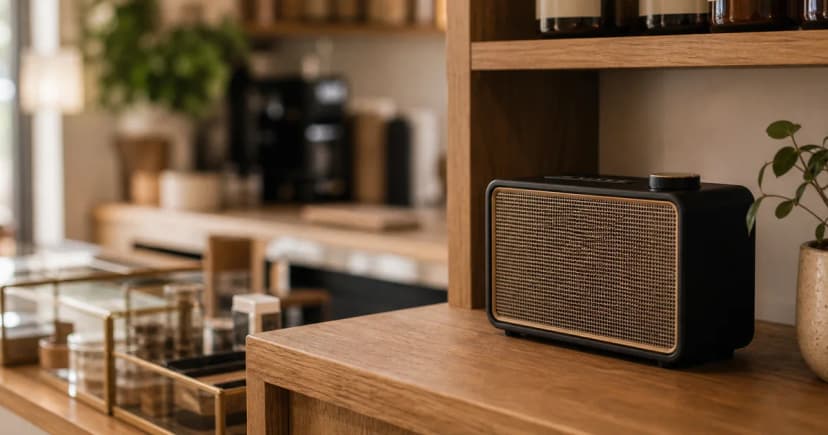
That second option is where a service like Sonosfera fits. Sonosfera is built and licensed for commercial background music, and provides a certificate-ready account record for the paid catalogue you play — you can view a sample Sonosfera certificate. For straightforward background audio at an eligible event, you can check current plans and trial details on the Sonosfera pricing page.
Two honest caveats. First, a commercial background-music service covers the background music it supplies — it does not replace OneMusic for live performances, cover bands or DJs playing their own tracks; for those you still deal with OneMusic. Second, always confirm your specific event setup, because the right answer changes with how you are actually using music.
What to check before you press play
A few minutes of homework before the event removes almost all the risk. Work through these in order:
Check the venue's existing licence. Ask whether the hired space already holds a music licence and, crucially, whether it extends to third-party events like yours. Many venue licences cover the venue's own use, not an external hirer's. Get the answer in writing from the venue manager — do not assume.
Define exactly how you'll use music. A live cover band, a DJ spinning recorded tracks, and quiet background music for an exhibition are three different licence situations. Match your permission to the specific activity, not a vague idea of "having music".
Identify the right OneMusic category. Event licences vary by event type, duration and daily attendance. Confirm the correct category with OneMusic rather than relying on what another promoter or the venue told you — categories and tariffs are theirs to define.
Keep your paperwork. Save confirmation emails, payment receipts and any correspondence with the venue about copyright responsibility. If anyone later asks what permissions you held, that record is your evidence.
Frequently asked questions
Do you need a licence to play music at an event in Australia?
In almost all public or commercial settings, yes. You need permission to play copyrighted recorded music in public. The narrow exceptions are music that is genuinely royalty-free or in the public domain, or where you hold direct written permission from every songwriter, publisher, artist and label involved — which is rarely practical for a normal playlist.
How much does an event music licence cost in Australia?
It varies by event type, audience capacity, duration and how music is used. OneMusic sets and updates the tariffs, so check the current rate on the OneMusic Australia website rather than budgeting from an old or secondhand figure.
What is the difference between APRA AMCOS and PPCA?
APRA AMCOS represents the people who wrote and published the song (the composition). PPCA represents the record label and artists behind the specific recording you play (the sound recording). Recorded music uses both rights at once, which is why OneMusic — the joint initiative of the two — lets you cover them through a single licence.
Does a venue's licence cover my event?
Not automatically. A venue's own music licence often covers the venue's use, not an external organiser's separate event. Ask the venue in writing whether their licence extends to third-party events before you assume you are covered.
Sort the licensing early
Securing the right music licence belongs on your event planning checklist, not in the panic of the final week. Audit your audio needs early: confirm whether the venue's licence covers you, decide how you will actually use music, and arrange the correct OneMusic category with time to spare.
Verify your specific situation with OneMusic Australia. If all you need is straightforward, licensed commercial background music for an eligible setting, check the current Sonosfera pricing. Get the permissions settled, and you can put your attention where it belongs — on the event itself.
Sources
OneMusic Australia — OneMusic Australia (the joint APRA AMCOS + PPCA licensing initiative)